
English
- English
- Español
- Português
- русский
- Français
- 日本語
- Deutsch
- tiếng Việt
- Italiano
- Nederlands
- ภาษาไทย
- Polski
- 한국어
- Svenska
- magyar
- Malay
- বাংলা ভাষার
- Dansk
- Suomi
- हिन्दी
- Pilipino
- Türkçe
- Gaeilge
- العربية
- Indonesia
- Norsk
- تمل
- český
- ελληνικά
- український
- Javanese
- فارسی
- தமிழ்
- తెలుగు
- नेपाली
- Burmese
- български
- ລາວ
- Latine
- Қазақша
- Euskal
- Azərbaycan
- Slovenský jazyk
- Македонски
- Lietuvos
- Eesti Keel
- Română
- Slovenski
- मराठी
- Srpski језик

Wholesale Custom FRP Grating with Superior Strength
Custom FRP Grating is specified for projects that require non-standard panel dimensions, openings, shapes or installation layouts. Yuruis can supply project-specific grating based on panel size, thickness, mesh opening, surface, color and fabrication requirements.
For technical confirmation, the installation dimensions, support spacing, drawings and required quantity can be reviewed before production. This helps determine the panel configuration and any required cut-outs or fabrication details.
What Can Be Customized?
The required configuration depends on the installation area and the way the panels will be supported. Common specifications include the following:
Panel Dimensions
Length and width can be specified according to the installation area. Accurate dimensions or an installation drawing can be used to determine the required panel layout.
Thickness and Mesh Opening
Panel thickness should be considered together with support spacing, application and loading requirements. Mesh opening can be selected according to drainage, access and installation requirements.
Cut-Outs and Panel Shape
Where pipes, columns, equipment or other structures occupy part of the installation area, panels may require specific openings or irregular edges. Their positions and dimensions can be confirmed from drawings or site measurements.
Surface and Color
Surface selection depends on the intended access conditions and application. Color can be specified when different areas need to be identified or when the project has a particular visual requirement.
Standard Panels vs. Custom Panels
|
Item |
Standard Panel |
Custom Panel |
|
Dimensions |
Selected from available sizes |
Specified for the installation area |
|
Shape |
Generally rectangular |
Can include specific shapes and openings |
|
Mesh |
Selected from available configurations |
Confirmed according to project requirements |
|
Cutting |
May require adjustment during installation |
Cut-outs can be planned before fabrication |
|
Planning |
Based on standard panel formats |
Based on the installation layout |
Specifications and Ordering Information
Before production, the following information can be confirmed to establish the required panel configuration.
|
Specification |
Information to Confirm |
|
Panel size |
Required length and width |
|
Thickness |
Required thickness based on the application and support spacing |
|
Mesh opening |
Required opening size |
|
Surface |
Required surface configuration |
|
Cut-outs |
Opening location and dimensions |
|
Color |
Project or area identification requirements |
|
Application |
Walkway, platform, drainage area, equipment access or other use |
|
Quantity |
Required number of panels or total area |
For non-standard projects, installation drawings are useful for confirming panel boundaries, support locations and cut-outs. When drawings are not available, dimensions, support spacing, mesh requirements and application information can be provided for technical review.
Applications
Custom panels can be used for industrial walkways, platforms, access flooring, drainage areas, equipment surroundings and utility structures where standard panel sizes or shapes do not match the installation.
The required FRP grating configuration should be considered together with loading conditions, support spacing, moisture, temperature, chemical exposure and the installation method. These factors can affect the appropriate material and panel specification.
Yuruis FRP Grating
Taizhou Yuruis New Materials Co., Ltd. supplies molded FRP grating and other fiber composite materials for industrial and engineering applications. Custom requirements can be discussed for panel dimensions, thickness, mesh opening, surface, shape and fabrication.
For quotation, customers can provide the installation drawing or basic project information, including panel dimensions, support spacing, application, required quantity and fabrication requirements. Yuruis can use this information to confirm the product specification before production.
FAQ
What information is needed for custom FRP grating?
Typical information includes panel dimensions, thickness, mesh opening, surface, cut-outs, application, support spacing and required quantity. An installation drawing is useful when the panel shape is not rectangular.
Can FRP grating be made from a drawing?
Yes. Drawings can be used to review panel boundaries, dimensions, support locations and required openings before fabrication.
How is the required thickness determined?
Thickness should be considered together with support spacing, application, loading requirements and the installation structure. Panel dimensions alone are not sufficient for selecting the thickness.
When should I choose custom panels instead of standard panels?
Custom panels are suitable when standard dimensions do not fit the installation or when the project requires specific shapes, openings, dimensions or fabrication details.
- View as
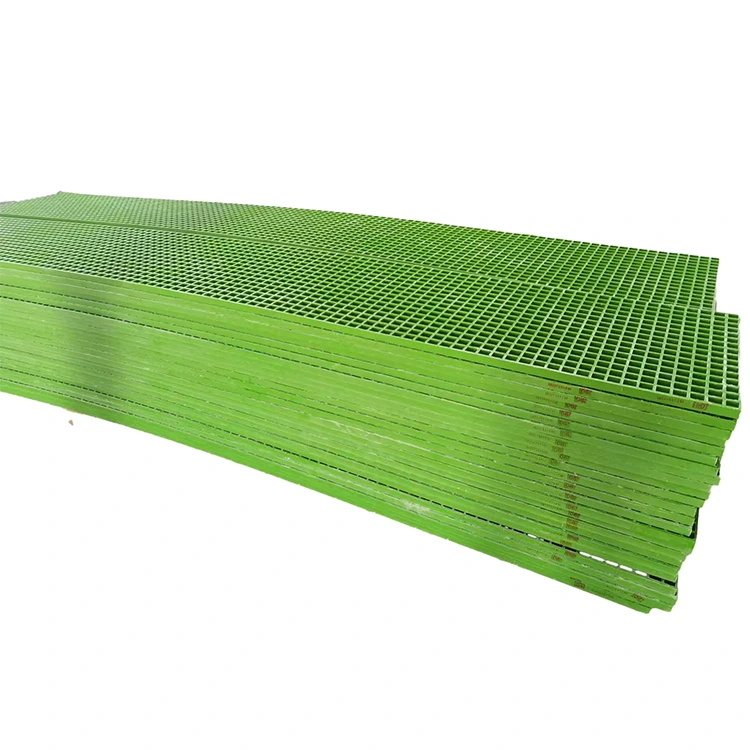
Corrosion-Resistant Weatherproof FRP Grating
A grating system serves more than a load-bearing function in an outdoor facility: its surface must also allow water to pass through and remain suitable for routine access and maintenance. Yuruis Corrosion-Resistant Weatherproof FRP Grating combines a fiberglass-reinforced resin matrix with an open-grid profile to meet these practical requirements. It is intended for walkways, working platforms, wastewater installations, coastal structures and industrial areas where a non-metallic grating solution is preferred.
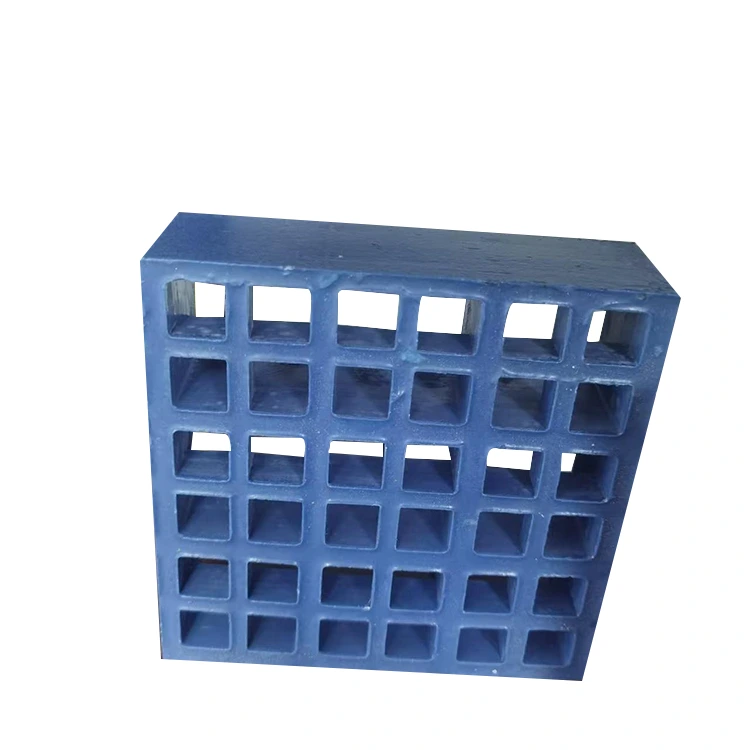
Construction Molded FRP Fiberglass Grating
Construction Molded FRP Fiberglass Grating is a lightweight, corrosion-resistant and load-bearing grating solution for construction and industrial facilities. Made from glass fiber reinforcement and thermosetting resin through a molded process, it provides a rigid open-grid structure with anti-slip footing, electrical insulation and good resistance to moisture and corrosive environments. Standard and customized thicknesses, mesh sizes, colors and panel dimensions are available from Yuruis.
Yuruis is a professional Custom FRP Grating manufacturer and supplier in China. Welcome to import quality products from our factory here.
News Recommendations





