
English
- English
- Español
- Português
- русский
- Français
- 日本語
- Deutsch
- tiếng Việt
- Italiano
- Nederlands
- ภาษาไทย
- Polski
- 한국어
- Svenska
- magyar
- Malay
- বাংলা ভাষার
- Dansk
- Suomi
- हिन्दी
- Pilipino
- Türkçe
- Gaeilge
- العربية
- Indonesia
- Norsk
- تمل
- český
- ελληνικά
- український
- Javanese
- فارسی
- தமிழ்
- తెలుగు
- नेपाली
- Burmese
- български
- ລາວ
- Latine
- Қазақша
- Euskal
- Azərbaycan
- Slovenský jazyk
- Македонски
- Lietuvos
- Eesti Keel
- Română
- Slovenski
- मराठी
- Srpski језик

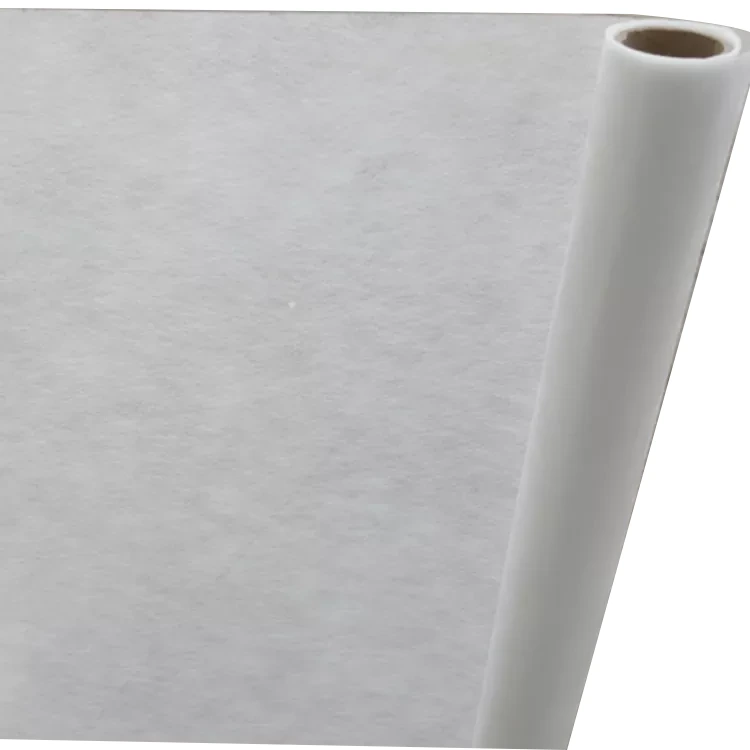
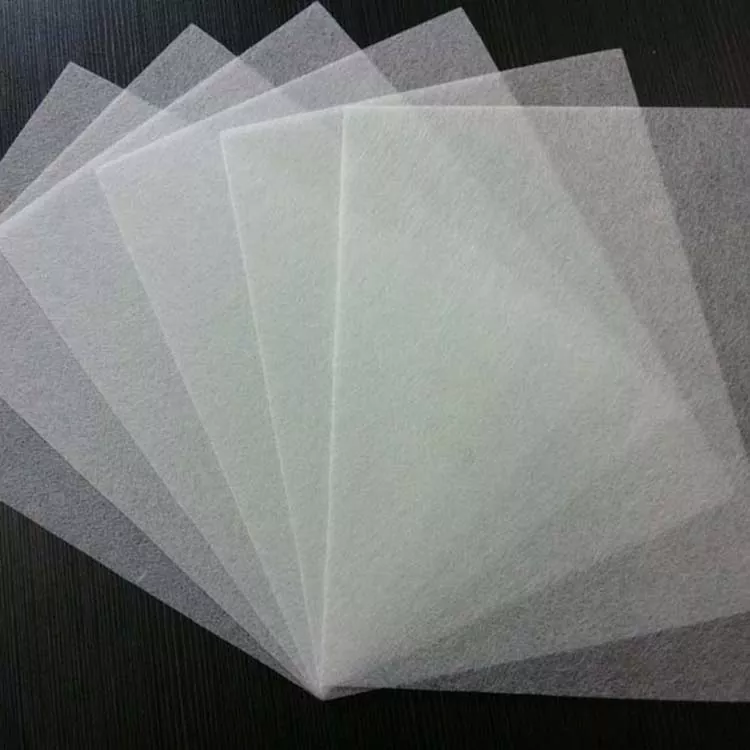
Fiberglass Roofing Mat
Fiberglass Roofing Mat uses randomly distributed E-Glass fibers to form a flexible reinforcement layer with good resin wet-out. It is suitable for FRP molding, hand lay-up and other composite processing methods, with common specifications available for different production requirements. Yuruis supports bulk supply for roofing and composite manufacturers.
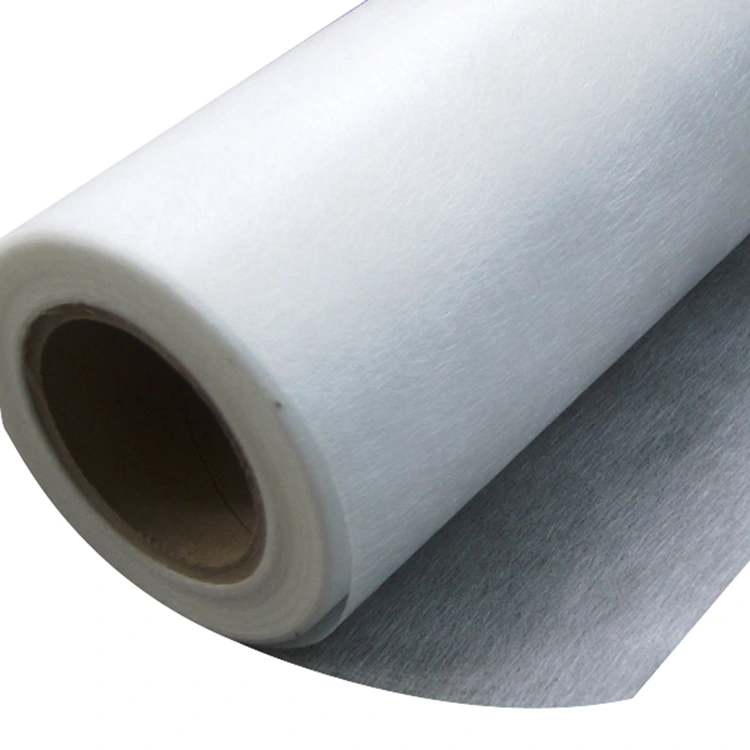
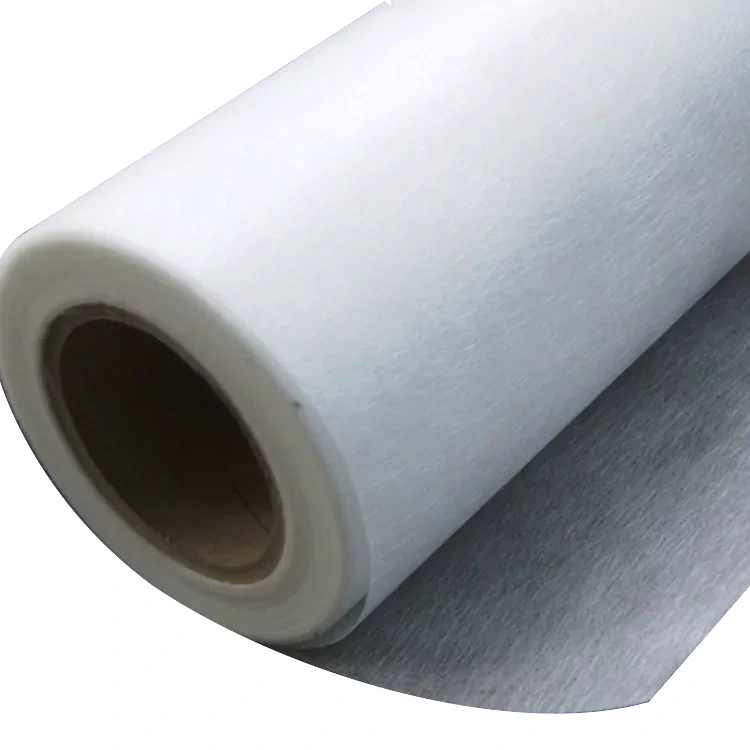
Our Yuruis Fiberglass Roofing Mat is a chopped strand fiberglass reinforcement designed for roofing membranes, waterproofing materials and other composite roofing products. It is made from E-Glass strands that are chopped into short fibers and randomly distributed to form a continuous nonwoven mat, with an emulsion binder used to hold the structure together. The random fiber arrangement provides reinforcement across the sheet, while the mat format allows it to be incorporated into continuous roofing and lamination processes.
For roofing applications, the suitable mat is determined by more than its nominal weight. Fiber distribution, binder content, moisture, longitudinal tensile strength, roll dimensions and the compatibility between the mat and the surrounding coating or resin system can all affect processing and finished-product consistency. Yuruis supplies 225 g/m², 300 g/m² and 450 g/m² specifications, with customized requirements available for different roofing material formulations.
The 450 g/m² grade is represented by the EMC450 specification in the technical data below, while lighter grades can be selected when the finished roofing structure requires a lower reinforcement weight. Width, roll length and binder characteristics can also be matched to the existing production process.
Product Technical Parameters
|
Parameter Item |
Detailed Specification |
|
Product Model |
EMC450 E-Glass Fiberglass Chopped Strand Mat |
|
Mat Type |
Chopped Strand Mat / Fiberglass Roofing Mat |
|
Fiberglass Material |
Premium E-Glass |
|
Filament Diameter |
13μm |
|
Binder Type |
Emulsion Binder |
|
Standard Weight |
225g/m², 300g/m², 450g/m² (customizable) |
|
Product Softness |
Super soft, easy to bend and fit complex molds |
|
Product Dimension Specification |
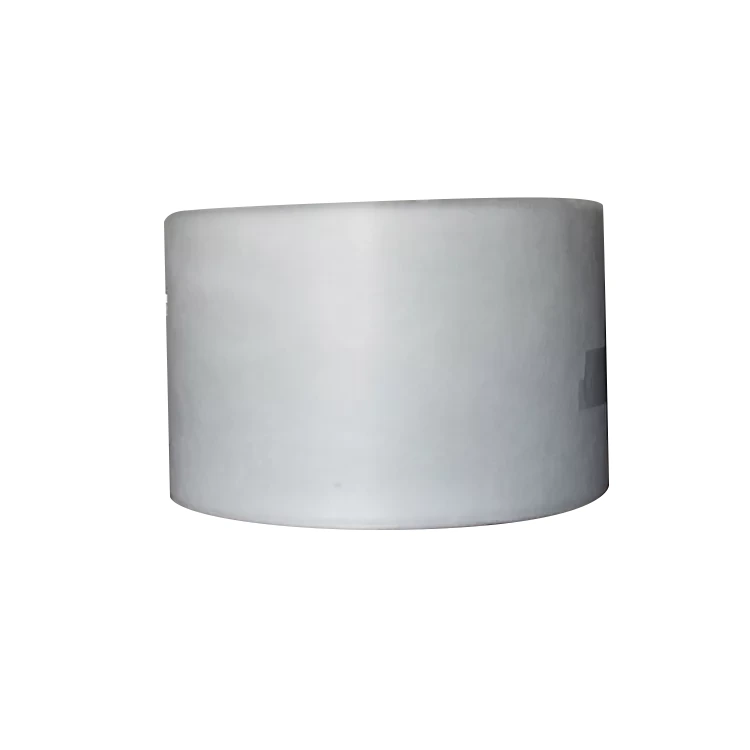
1.04m width, 240m roll length, 30kg per roll |
|
Production Technology |
Professional chopped strand forming technology |
|
Color |
Pure White |
|
Export Packaging |
Standard export paper box |
|
Origin |
Taizhou, Jiangsu Province, China |
|
HS Code |
7019310000 |
|
Annual Production Capacity |
4000 Tons |
Why the Mat Structure Matters in Roofing
A roofing mat is not simply a layer of fiberglass added to a finished product. During manufacturing, the reinforcement needs to remain sufficiently uniform as it is fed, impregnated, laminated or combined with other roofing materials. The randomly distributed chopped fibers create a nonwoven structure that can provide reinforcement throughout the sheet rather than concentrating reinforcement along a single fiber direction.
This structure is useful when the roofing material requires a continuous fiberglass layer that can be incorporated into a coating, membrane or composite construction. The final performance, however, depends on the complete roofing system, including the binder or resin, coating, substrate and processing conditions.
For manufacturers, the main specifications to compare are:
· Area weight and reinforcement loading
· Binder type and content
· Longitudinal tensile strength
· Moisture content
· Roll width and length
· Compatibility with the coating or resin system
Selecting the Right Weight for Roofing Materials
The available 225 g/m², 300 g/m² and 450 g/m² grades allow the reinforcement loading to be adjusted according to the construction of the roofing material. A lighter specification can be considered where the fiberglass layer is intended to provide reinforcement without adding unnecessary material weight, while a heavier mat can be selected when the formulation requires a more substantial fiberglass layer.
The actual selection should be based on the existing production recipe and target finished-product properties rather than GSM alone. Binder level, coating pickup, line speed and the way the mat is combined with other layers may change the requirements.
For an existing roofing formulation, the current mat specification is often the most useful starting point for replacement or optimization. Providing the GSM, width, roll length, binder requirements and application allows the material to be matched more accurately.
Emulsion Binder and Processing Compatibility
The emulsion binder holds the chopped glass fibers together and gives the dry mat sufficient integrity for handling before it becomes part of the finished roofing structure. Binder characteristics also need to be considered together with the coating, resin or impregnation system used downstream, because compatibility can affect wetting, bonding and the behavior of the mat during processing.
For this reason, the same fiberglass weight may not be interchangeable between different roofing formulations. A specification that works in one membrane or composite construction should be checked against the binder system, processing temperature and subsequent coating or lamination steps before production is changed.
The available product uses an emulsion binder and E-Glass reinforcement, with 13μm filament diameter listed for the reference specification.
Production Process for Consistent Fiberglass Mat
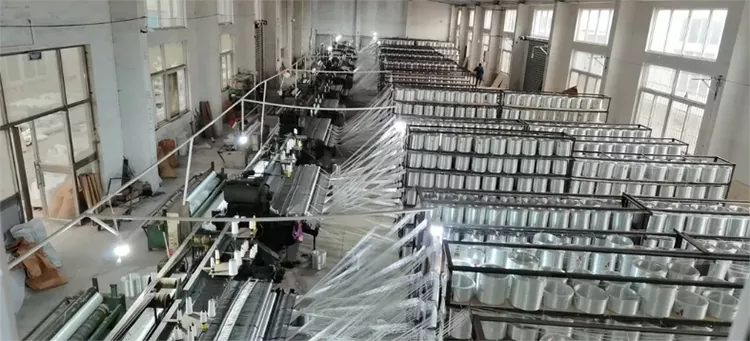
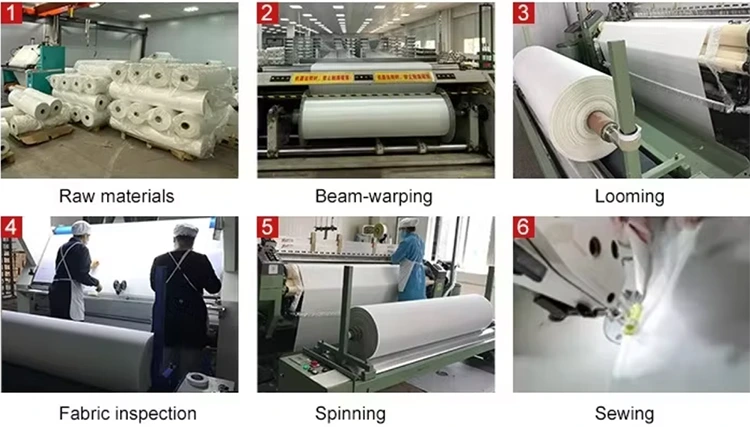
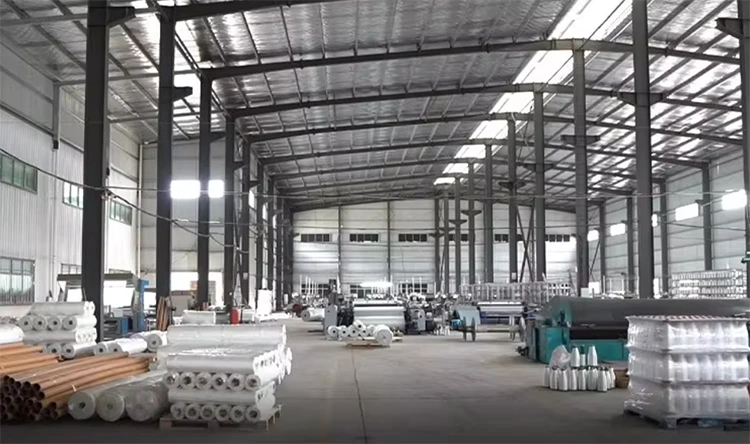
The manufacturing process begins with E-Glass fiber preparation and continues through chopping, random fiber distribution, binder application, forming and dimensional control. Each stage influences the structure of the finished mat, so production control is focused on maintaining the specified basis weight, width, fiber distribution and physical properties.
1. Fiber Preparation: E-Glass fiber is prepared for the chopped strand mat production process, with the reference filament diameter specified at 13μm.
2. Fixed-Length Chopping: Continuous glass fiber strands are cut into short fibers with controlled dimensions before they enter the forming process.
3. Random Fiber Distribution: The chopped fibers are distributed in different directions to form a continuous nonwoven reinforcement layer.
4. Binder Application: Emulsion binder is applied to hold the randomly distributed fibers together and provide the required dry mat integrity.
5. Forming and Curing: The fiber-binder structure is formed and cured under controlled production conditions to obtain the required sheet structure.
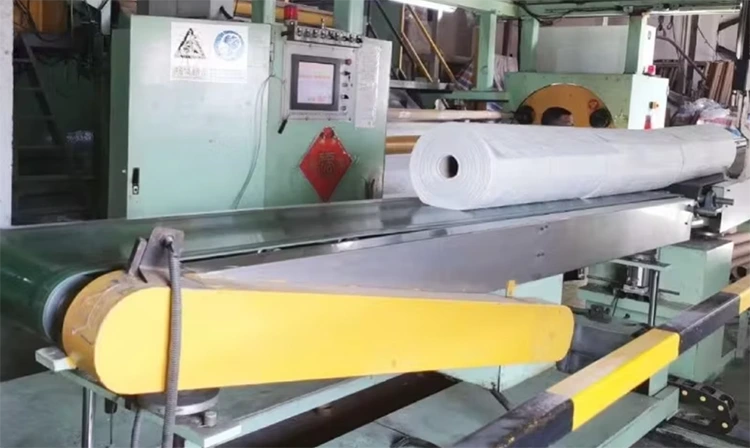
6. Weight and Dimension Control: The finished mat is checked according to the specified weight and roll dimensions, including the reference 1.04m width and 240m roll length.
7. Inspection and Packaging: Relevant physical properties and appearance are checked before the finished rolls are packed for shipment.
Quality Control and Supply Information
For a roofing material manufacturer, consistency between production batches is important because changes in basis weight, moisture or tensile strength can affect the behavior of the reinforcement during continuous processing. Yuruis uses production and inspection procedures to monitor the main specifications of the fiberglass mat, including weight, dimensions and physical properties.
The reference EMC450 specification has an annual production capacity of 4,000 tons across the product range. Conventional specifications can be supplied in standard roll formats, while customized weight and dimensional requirements can be discussed according to the application and production process.
Yuruis is based in Taizhou, Jiangsu Province, China, and supplies fiberglass composite materials for industrial and building-material applications. The company holds ISO 9001 quality management system certification, while any product-specific certification or compliance requirement should be confirmed according to the actual specification and intended market.
Applications
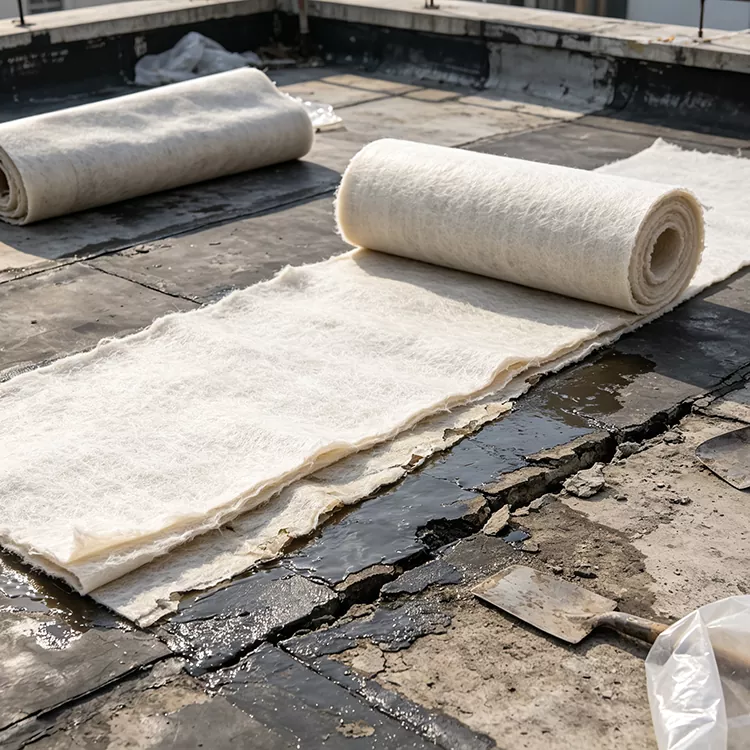
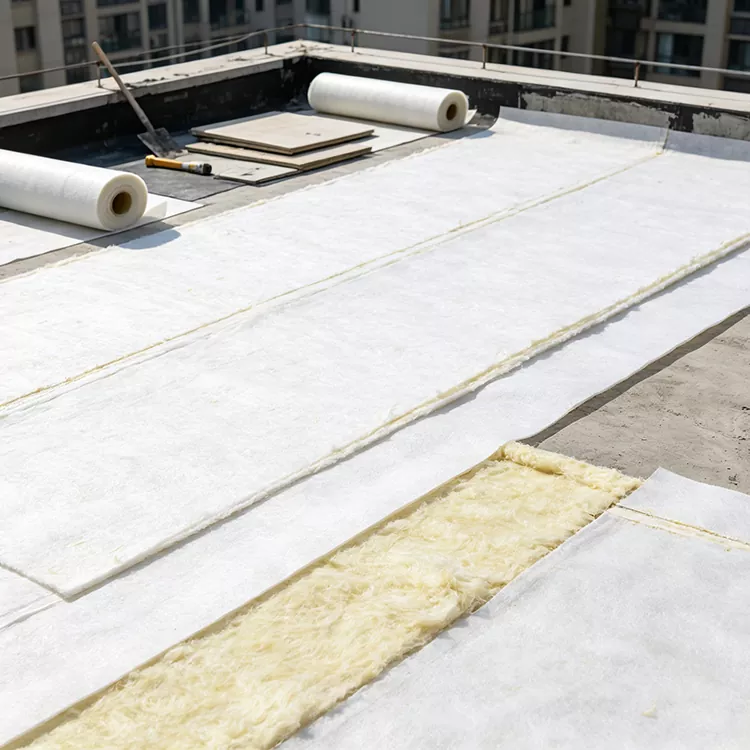
Fiberglass Roofing Mat is used as a continuous fiberglass reinforcement layer in roofing, waterproofing and related composite building materials. Its role is to provide a nonwoven reinforcement structure within the finished material, while the actual performance depends on the binder, coating system, processing method and overall construction of the product.
Common application areas include:
Roofing membranes
Waterproofing materials
Roofing composite sheets
Building waterproofing systems
FRP and composite roofing components
Protective and reinforcing layers
The mat can be incorporated into an existing production specification or evaluated as a replacement for another fiberglass reinforcement when a manufacturer needs to adjust material sourcing without changing the overall production process. For replacement projects, comparing the current GSM, roll width, binder system, roll length and processing method provides a practical basis for selecting a compatible specification.
Customized Specifications for Roofing Production
Although 225 g/m², 300 g/m² and 450 g/m² are available as conventional specifications, different roofing and waterproofing products may require other basis weights, roll widths or binder configurations because production lines, coating systems and finished material structures vary from one application to another. Customization is therefore considered according to the actual production requirements rather than being limited to a single standard specification.
For specification matching, the following information can help determine a suitable material configuration:
Required area weight, roll width and roll length, together with the binder or resin system, roofing or waterproofing application, production method and estimated order quantity.
For manufacturers replacing an existing fiberglass reinforcement, providing the current technical specification or sample information can also help with material comparison and specification matching before production.
The reference specification is 1.04m wide, 240m per roll and 30kg per roll, while customized dimensions can be discussed according to the production line, finished product structure and order requirements.
FAQ
Q1: What is Fiberglass Roofing Mat used for?
A: Fiberglass Roofing Mat is a chopped strand fiberglass reinforcement used in roofing, waterproofing and related composite building materials. It is generally incorporated as a reinforcement layer within the finished construction rather than used as the roofing material by itself.
Q2: What weights are available?
A: Yuruis supplies 225 g/m², 300 g/m² and 450 g/m² as conventional specifications. The appropriate weight depends on the reinforcement requirement, production method and construction of the finished roofing product, with customized specifications also available for discussion.
Q3: What is the difference between a roofing mat and a general chopped strand mat?
A: Both are based on randomly distributed chopped glass fibers, but roofing-specific grades are selected according to the requirements of roofing or waterproofing production, including basis weight, binder characteristics, roll format and downstream coating or lamination compatibility.
Q4: Can it be used with roofing and waterproofing systems?
A: Yes. It can be incorporated into selected roofing membranes, waterproofing materials and composite roofing structures. The suitable binder or coating system should be confirmed because final performance depends on the complete formulation and processing conditions.
Q5: What roll dimensions are available?
A: The reference specification is 1.04m wide, 240m in roll length and approximately 30kg per roll. Width and other roll dimensions can be discussed according to the production line and order requirements.
Q6: What information is needed for a quotation?
A: Please provide the required GSM, roll width, roll length, roofing or waterproofing application, production method, binder or resin system and estimated quantity. If you are replacing an existing material, its current technical specification or sample information can also be used for comparison.
Send Inquiry
Contact Info
-
Address
No. 18, Fuyuan Road, Dalun Town Industrial Concentration Zone, Jiangyan District, Taizhou City, Jiangsu Province, China
-
Tel
-
Email
Send your requirements to Yuruis for carbon fiber materials, FRP grating or fiberglass materials. Include product specifications, dimensions, quantity, application or other requirements so our team can review the details and respond accordingly.
News Recommendations





