
English
- English
- Español
- Português
- русский
- Français
- 日本語
- Deutsch
- tiếng Việt
- Italiano
- Nederlands
- ภาษาไทย
- Polski
- 한국어
- Svenska
- magyar
- Malay
- বাংলা ভাষার
- Dansk
- Suomi
- हिन्दी
- Pilipino
- Türkçe
- Gaeilge
- العربية
- Indonesia
- Norsk
- تمل
- český
- ελληνικά
- український
- Javanese
- فارسی
- தமிழ்
- తెలుగు
- नेपाली
- Burmese
- български
- ລາວ
- Latine
- Қазақша
- Euskal
- Azərbaycan
- Slovenský jazyk
- Македонски
- Lietuvos
- Eesti Keel
- Română
- Slovenski
- मराठी
- Srpski језик

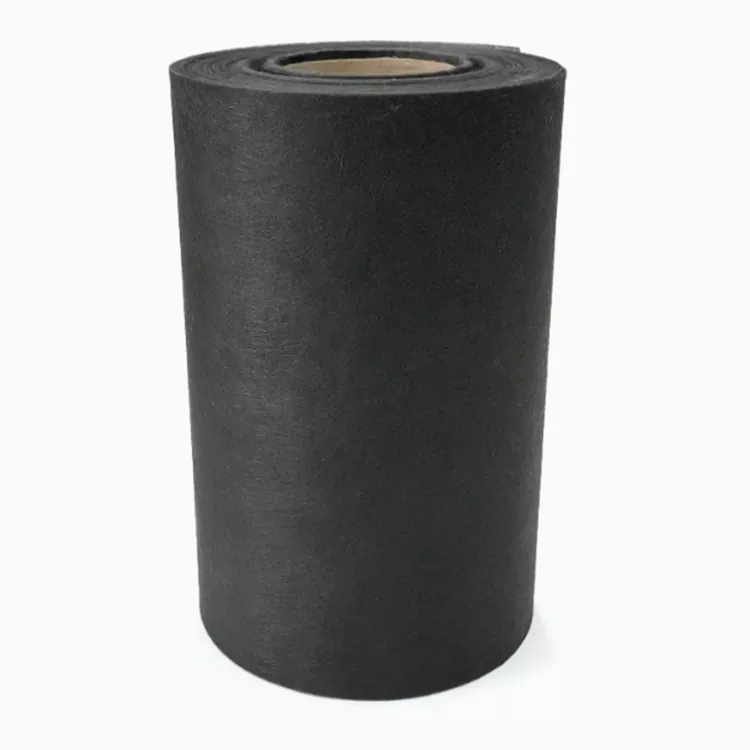
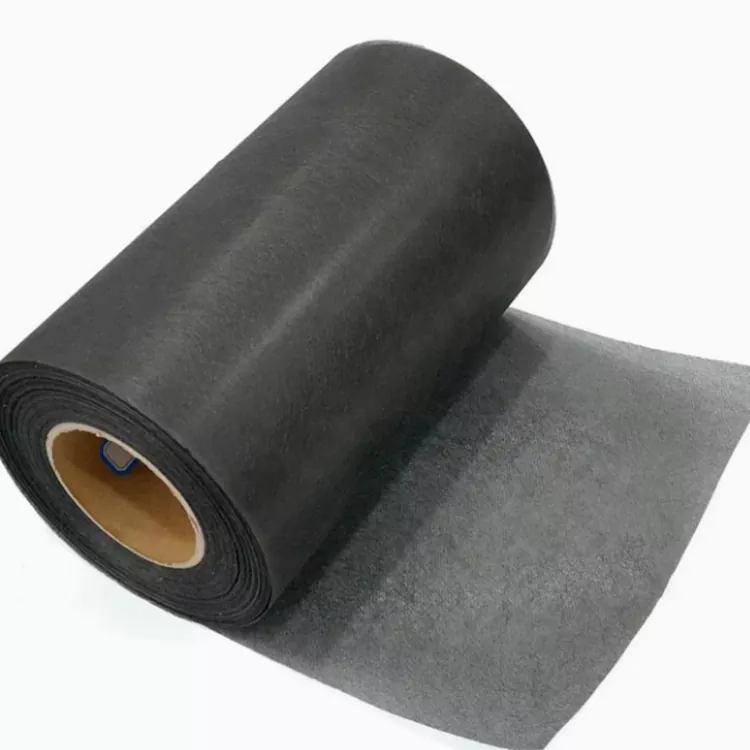
Carbon Fiber Surface Felt for Filament Winding
Surface quality becomes harder to control as filament-wound composite parts become larger, more curved, or more demanding in appearance. Yuruis's Carbon Fiber Surface Felt for Filament Winding is used as a conformable carbon-fiber layer in selected FRP and CFRP structures, helping manufacturers obtain a more even surface while maintaining good resin wet-out during winding and molding.
Filament winding is mainly concerned with reinforcement placement, winding angle and laminate strength. But the surface layer also affects how the finished composite looks and behaves during production.
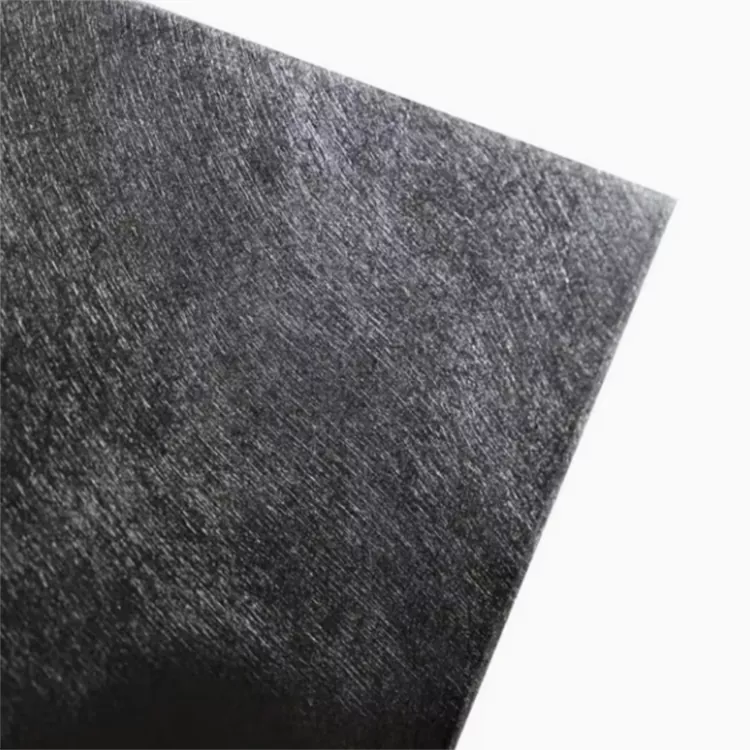
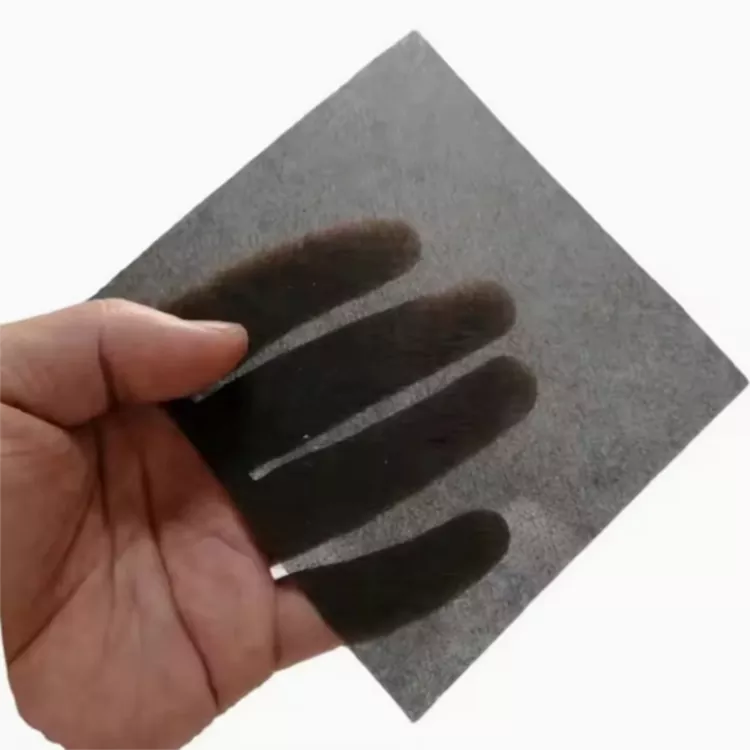
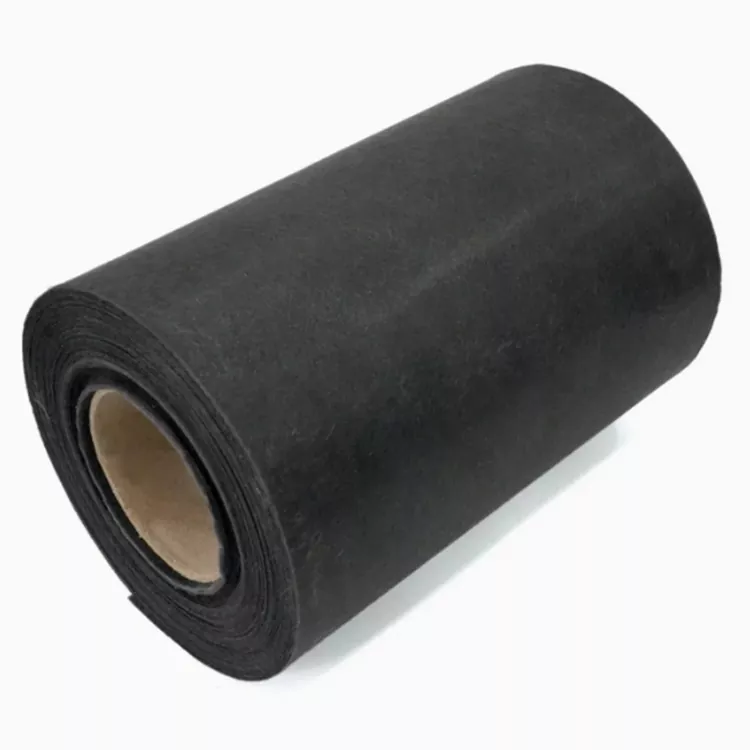
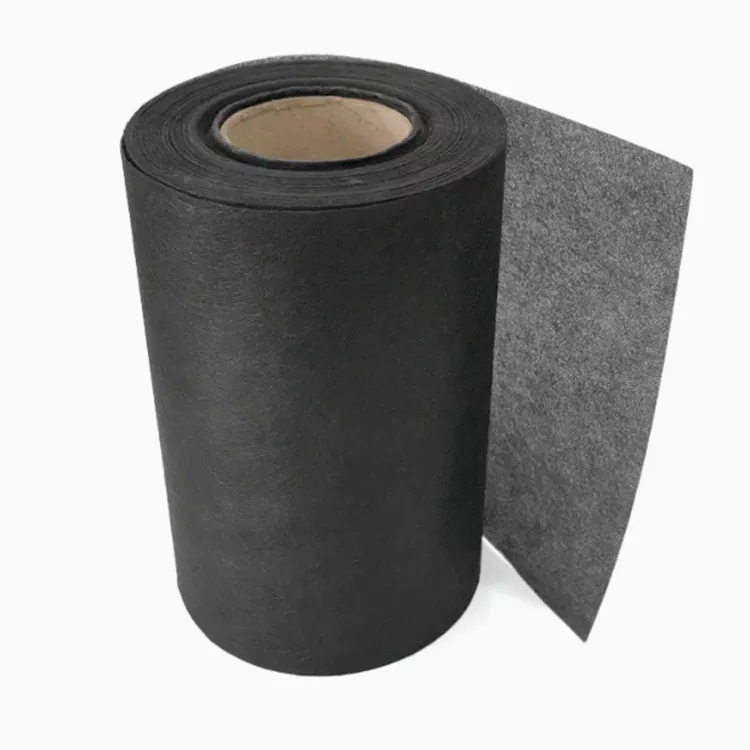
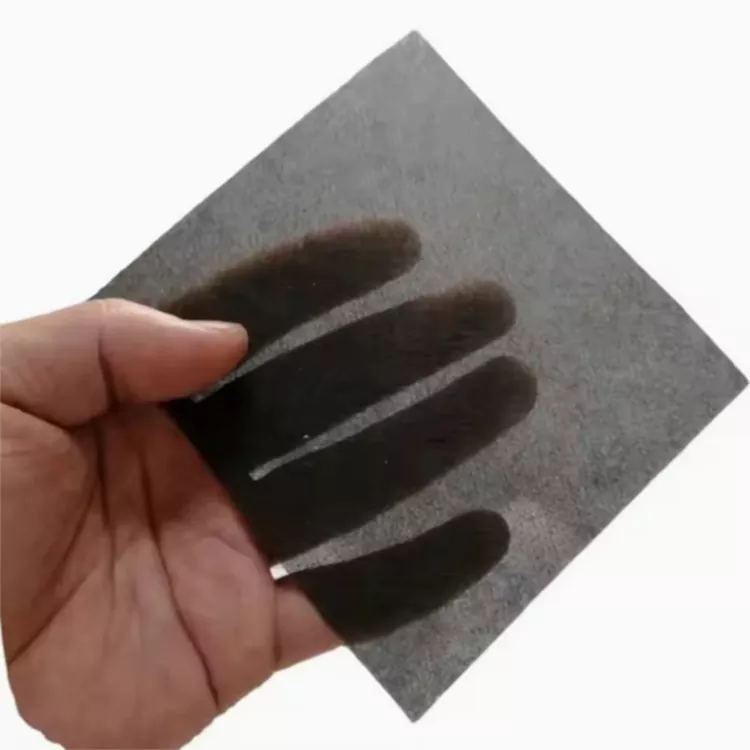
Carbon Fiber Surface Felt for Filament Winding is a non-woven material made from chopped carbon fiber. It is used as a distributed carbon-fiber layer on cylindrical and curved composite parts, where the main winding reinforcement alone may leave a pronounced fiber pattern.
The felt is not a substitute for continuous structural reinforcement. It has a different role in the laminate: surface coverage, fiber distribution and interaction with the resin system.
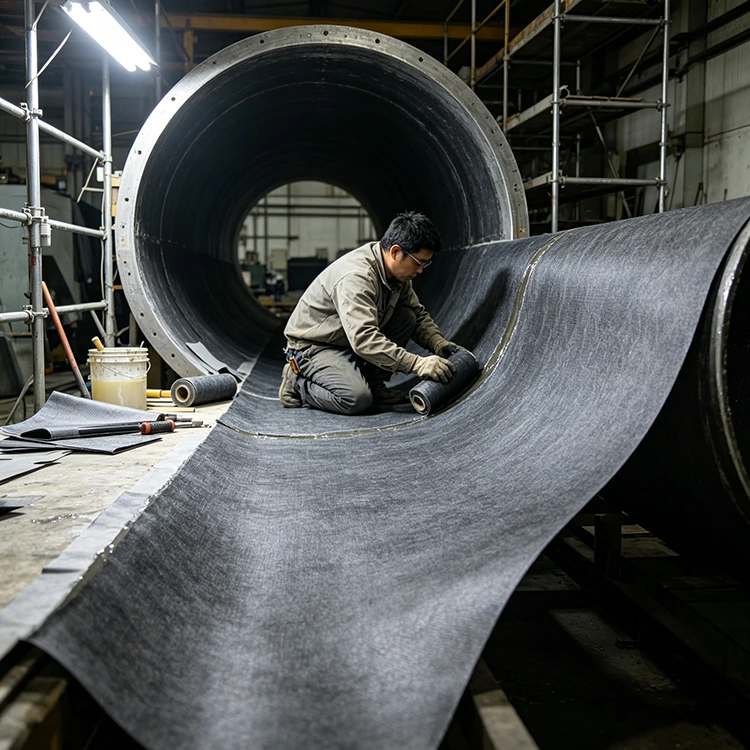
Surface Layer in Filament Winding
A wound composite part usually contains several layers. Continuous roving or fabric provides the required reinforcement, while resin bonds the fibers into the finished laminate.
A carbon fiber felt can be added as a separate surface layer. Its chopped fibers are distributed through a non-woven structure rather than arranged as continuous yarns. This makes the material suitable for covering curved surfaces and reducing the visual pattern of the underlying reinforcement.
The layer may be positioned on the inside, outside or another specified location in the laminate. Its position is determined by the construction of the finished component.
Applications for Wound Composite Products
FRP and CFRP Pipes
Composite pipes are commonly produced over a cylindrical mandrel with reinforcement wound at different angles. A surface felt can be incorporated into the inner or outer layer when a distributed carbon-fiber surface is required.
It also provides more continuous fiber coverage over the winding pattern. The final surface, however, is influenced by the resin and curing process as well as the felt.
Chemical Storage Tanks
Filament-wound tanks often combine glass fiber, carbon fiber and resin systems in different laminate positions. Carbon felt can be used where the specified construction calls for a carbon-based surface layer.
For chemical service, the complete laminate needs to be considered. Resin selection and the stored medium are particularly important.
Pressure Vessels
Pressure vessels require controlled reinforcement placement and winding angles because the laminate carries internal pressure. A felt layer serves a different function from the main structural winding.
For this reason, the structural reinforcement and the surface layer should be specified separately in the laminate design.
Other Wound Components
Other possible applications include composite rollers, industrial tubes, cylindrical housings and selected CFRP components. The common feature is a curved or cylindrical surface formed by a winding process.
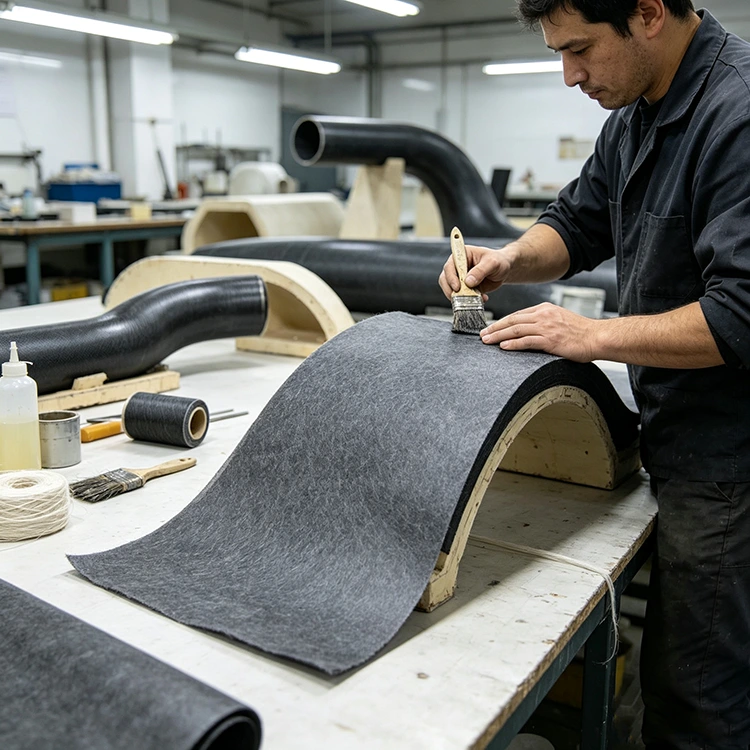
Chopped Fiber Structure
The difference between felt and woven carbon fabric starts with the fiber structure.
Woven fabric uses continuous yarns arranged in defined directions. It is selected when directional reinforcement is required.
Carbon fiber felt uses chopped fibers distributed through a non-woven layer. There is no fixed woven 0° or 90° yarn pattern. As a result, the felt can spread across a curved surface without introducing the same directional structure.
This makes felt and woven fabric complementary materials rather than direct equivalents. One provides controlled reinforcement orientation; the other provides distributed surface coverage.
Resin Wet-Out During Winding
Resin wet-out is one of the practical points to check when introducing a felt into an existing winding process.
The resin must penetrate the chopped-fiber structure before curing. Resin viscosity, resin content, application method, winding speed and temperature all affect how quickly and evenly this happens.
Yuruis supplies the material as a non-woven carbon fiber felt. Its performance during winding is still related to the customer's resin and processing conditions.
A production trial using the actual resin system is therefore more useful than judging the material from its specification alone. It shows how the felt feeds, conforms to the mandrel and wets out during the real process.

Surface Appearance After Curing
The surface of a filament-wound component often reflects the reinforcement pattern underneath. A distributed felt layer can help create a more continuous carbon-fiber surface.
The available surface specifications are:
Glossy
Matte
50% Glossy
These surface options describe the supplied material. They do not determine the final appearance by themselves.
Resin formulation, mandrel or mold condition, curing temperature and post-processing can all change the appearance of the finished composite.

Material Configuration
|
Item |
Specification |
|
Product Name |
Carbon Fiber Surface Felt for Filament Winding |
|
Brand |
Yuruis |
|
Material |
100% Carbon Fiber |
|
Raw Material |
Polyacrylonitrile-Based Carbon Fiber |
|
Fiber Form |
Chopped Fiber |
|
Structure |
Non-Woven Carbon Fiber Felt |
|
Performance |
Superior Modulus Type |
|
Mechanical Property |
High-Performance Type |
|
Color |
Black |
|
Standard Width |
1 m / 1.25 m |
|
Thickness |
Customized |
|
Dimensions |
Customer Made |
|
Length |
Customer Request |
|
Surface |
Glossy / Matte / 50% Glossy |
|
Customization |
Available |
|
Packaging |
Paper Box |
|
Origin |
Taizhou, Jiangsu Province, China |
|
HS Code |
6815993100 |
|
Production Capacity |
2 Million m²/Year |
|
Trademark |
Yuruis |
Choosing the Right Specification
The felt should be matched to the actual winding process. Product size, resin and surface requirements are more useful starting points than thickness alone.
Component Geometry
Diameter, length and curvature affect how the material is placed and held on the mandrel. A straight pipe and a large tank may require different handling during production.
Resin System
Specify the resin type and, where possible, its normal processing conditions. Viscosity and resin application have a direct effect on wet-out.
Surface Requirement
Specify whether the main requirement is fiber coverage, surface texture or a particular supplied finish. The available options are glossy, matte and 50% glossy.
Dimensions
Standard widths are 1 m and 1.25 m. Thickness, length and dimensions can be made according to the production requirement.
Winding Conditions
Winding speed, resin application and material feeding should be considered when the felt is used on an automated or continuous line.
Trial on the Winding Line
A small production trial can answer questions that a material specification cannot. The felt can be checked with the customer's normal resin, winding speed and curing conditions.
The main points to observe are:
· Feeding and handling
· Conformability to the mandrel
· Resin wet-out
· Fiber distribution
· Surface condition after curing
· Compatibility with the existing laminate
An existing material specification, drawing or sample can be used when the felt is being introduced into an established winding process.
For Filament-Wound Composite Manufacturing
Carbon Fiber Surface Felt for Filament Winding is supplied for composite pipes, chemical tanks, pressure vessels, rollers, housings and other wound components.
Standard widths are 1 m and 1.25 m. Thickness, length and dimensions are available according to the production requirement.
For a specific application, the component geometry, resin system, laminate position and required surface finish provide the basic information for specification.
FAQ
What is Carbon Fiber Surface Felt for Filament Winding?
It is a non-woven chopped carbon fiber material used as a surface or functional layer in filament-wound composite structures. It is different from the continuous reinforcement used for the main structural layer.
Can the felt be used on cylindrical composite products?
Yes. The non-woven structure can follow cylindrical and curved surfaces. The actual handling depends on the felt specification, product diameter and winding process.
Is it the same as woven carbon fabric?
No. Woven carbon fabric contains continuous yarns in defined directions. Felt contains distributed chopped fibers and is used for a different laminate function.
Can it be used with epoxy or vinyl ester resin?
It can be processed with different resin systems. Wet-out depends on resin viscosity, application method, temperature, resin content and curing conditions.
What surface finishes are available?
The available specifications are glossy, matte and 50% glossy. The final appearance also depends on the resin, mandrel or mold surface and curing process.
Can the width and thickness be customized?
Yes. Standard widths are 1 m and 1.25 m. Thickness, length and dimensions can be customized according to the application.
What information is needed for a quotation?
Useful information includes component size and shape, resin type, felt dimensions, surface requirement and approximate quantity. An existing material specification or sample is helpful for non-standard applications.
Can samples be provided?
Sample quantities can be discussed according to the required dimensions and application. Testing the felt with the actual resin and winding process provides a direct reference for production.
Send Inquiry
Contact Info
-
Address
No. 18, Fuyuan Road, Dalun Town Industrial Concentration Zone, Jiangyan District, Taizhou City, Jiangsu Province, China
-
Tel
-
Email
Send your requirements to Yuruis for carbon fiber materials, FRP grating or fiberglass materials. Include product specifications, dimensions, quantity, application or other requirements so our team can review the details and respond accordingly.
Related Products
News Recommendations





