English
- English
- Español
- Português
- русский
- Français
- 日本語
- Deutsch
- tiếng Việt
- Italiano
- Nederlands
- ภาษาไทย
- Polski
- 한국어
- Svenska
- magyar
- Malay
- বাংলা ভাষার
- Dansk
- Suomi
- हिन्दी
- Pilipino
- Türkçe
- Gaeilge
- العربية
- Indonesia
- Norsk
- تمل
- český
- ελληνικά
- український
- Javanese
- فارسی
- தமிழ்
- తెలుగు
- नेपाली
- Burmese
- български
- ລາວ
- Latine
- Қазақша
- Euskal
- Azərbaycan
- Slovenský jazyk
- Македонски
- Lietuvos
- Eesti Keel
- Română
- Slovenski
- मराठी
- Srpski језик

FRP Grating Load-Bearing and Impact Resistance Testing
Load-bearing capacity and impact resistance are important factors when selecting fiberglass reinforced plastic (FRP) grating for industrial walkways, working platforms, docks, and other access areas. These tests help evaluate how a grating panel responds to applied loads, how much it deflects under load, and how it behaves when subjected to impact.
At Yuruis, FRP grating performance can be assessed according to the product specifications, intended application, and applicable testing requirements. Full-panel load testing and impact testing provide different types of information for evaluating grating suitability in industrial environments.
1. FRP Grating Load-Bearing Capacity Test
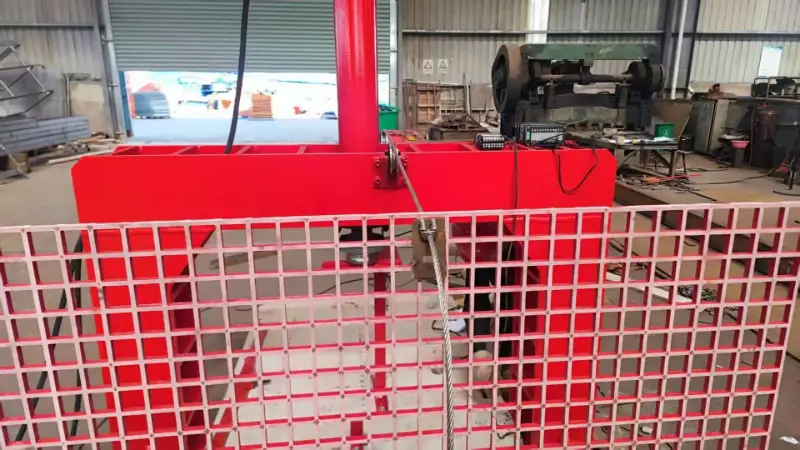
The load-bearing capacity test evaluates the relationship between applied load and mid-span deflection, as well as the load at which structural damage or failure occurs. Unlike a small material coupon test, a grating specimen includes multiple load-bearing bars and their connecting crossbars, providing a more representative assessment of the grating structure.
JC/T 1026-2007, the Chinese building materials industry standard for load-bearing glass fiber reinforced thermosetting resin grating, includes a three-point bending method for determining load-bearing capacity. Test conditions should be selected according to the applicable standard and the grating specifications.
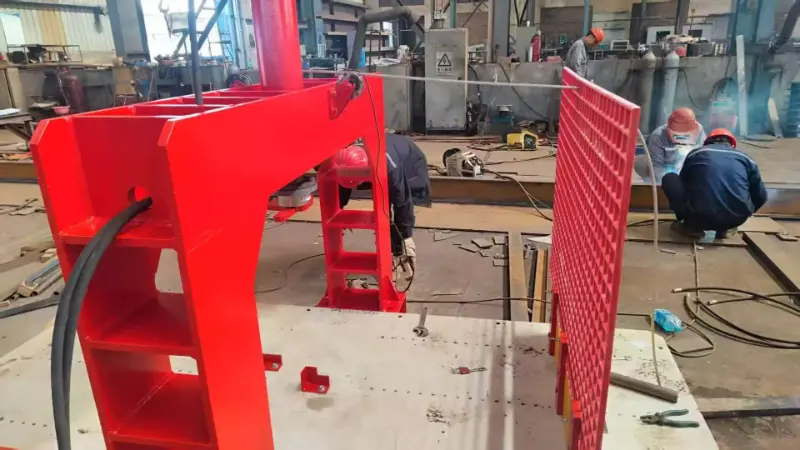
Test Equipment
- Rigid support fixtures for supporting the grating specimen
- Loading head or load distribution beam
- Load cell or force measurement system
- Displacement sensor, such as an LVDT, for measuring mid-span deflection
- Data acquisition equipment for recording load and displacement
Test Procedure
- Specimen preparation: Select a representative section of FRP grating with the required dimensions and load-bearing bar arrangement. Set the test span according to the applicable standard or agreed project specifications. Common project spans may include 300 mm, 400 mm, and 500 mm, although the span requirements under JC/T 1026-2007 should be followed when claiming compliance with that standard.
- Support setup: Place the specimen horizontally on two supports to create a simply supported arrangement. Ensure that the supports and loading head are properly positioned and that the specimen can deflect without unintended restraint.
- Load application: Apply the specified load through the loading head. Depending on the test method and project requirements, the setup may simulate a concentrated load or evaluate performance under a specified distributed load.
- Load and deflection measurement: Record the applied load and corresponding mid-span deflection. Loading rate, load increments, and holding periods should follow the selected test method rather than a universal fixed schedule.
- Failure observation: Where required, continue loading until the specified endpoint or structural failure. Record visible cracking, delamination, broken fibers, damaged crossbar connections, and the location of failure.
Key Results and Evaluation
- Load-deflection relationship: Shows how the grating deforms as the applied load increases.
- Deflection at the specified load: Helps assess stiffness and suitability for the intended span and service load.
- Ultimate failure load: Records the load reached at the defined failure endpoint.
- Failure mode and location: Helps identify damage in load-bearing bars, crossbar connections, or other structural areas.
A deflection limit such as span/150 may be used in some project specifications, but it is not a universal acceptance criterion for every FRP grating. The allowable deflection and required load capacity should be established according to the applicable standard, design conditions, and customer requirements.
2. FRP Grating Impact Resistance Test
Impact resistance testing evaluates how a material responds to a sudden load. It is relevant when FRP grating may be exposed to accidental impacts during installation, maintenance, material handling, or operation.
GB/T 1451-2005 specifies the Charpy impact test method for fiber-reinforced plastic composites. This material-level test measures impact behavior under defined specimen and test conditions. It should be distinguished from an assembled grating panel impact test, which evaluates the response of the grating structure as a whole.
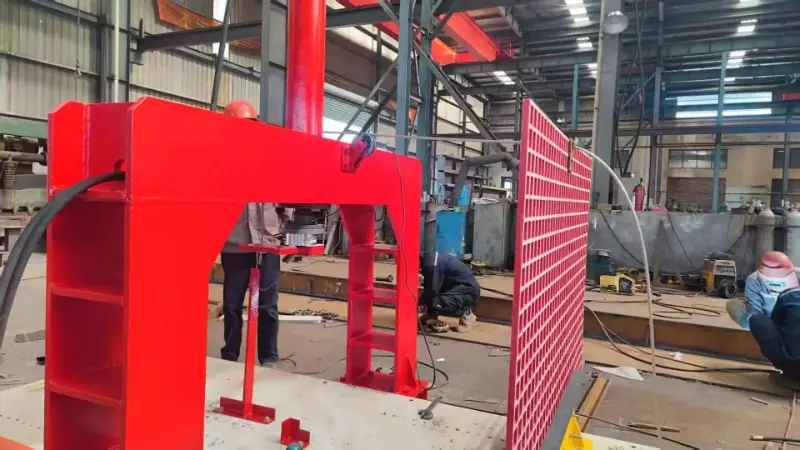
Test Equipment and Procedure
- Equipment: A pendulum impact testing machine suitable for the selected test method.
- Specimen preparation: Prepare specimens from representative material or grating components according to the applicable standard. Notched or unnotched specimens should be used as specified by the method.
- Support and span: Position the specimen using the prescribed support arrangement and test span.
- Impact application: Release the pendulum to strike the specimen under the specified conditions.
- Result recording: Record the absorbed impact energy and observe the fracture characteristics where required.
For industrial grating applications, material-level impact results should not be treated as a direct substitute for testing the complete panel. Panel dimensions, support conditions, grating construction, and the impact location can all affect the result.
3. International Requirements for FRP Grating Applications
For overseas projects, the applicable test requirements depend on the installation environment and the project specification. ASTM F3059 addresses FRP gratings used in marine construction and shipbuilding. Its performance requirements cover multiple aspects, including load-deflection limits, ultimate failure, wheel loading, assembled-panel impact resistance, skid resistance, durability, and fire-related performance.
These requirements are particularly relevant when evaluating FRP grating for marine facilities, shipbuilding, industrial platforms, and other applications where personnel access and structural performance are important. Compliance should be established against the applicable edition of the standard and the specific product qualification requirements.
4. Why Load and Impact Testing Matter for FRP Grating Selection
FRP grating is used in industrial flooring, walkways, drainage covers, and access platforms. Selecting a suitable panel requires more than checking the nominal dimensions or material type. The support span, expected load, load distribution, panel construction, and operating environment all influence performance.
- Industrial walkways: Load-deflection data helps assess performance under pedestrian traffic.
- Maintenance platforms: Load capacity and deflection are important when specifying support spacing and service loads.
- Docks and marine facilities: Wheel loading, impact resistance, slip resistance, and environmental durability may require additional evaluation.
- Industrial access areas: Testing helps engineers compare grating options against project-specific performance requirements.
Discuss Your FRP Grating Requirements with Yuruis
Yuruis supplies standard and customized FRP grating for industrial flooring, walkways, drainage covers, and project-specific access applications. When selecting a grating panel, customers can specify the required dimensions, support span, design load, surface requirements, and applicable testing standards.
Contact Yuruis to discuss FRP grating specifications for your project. Providing the intended application, loading conditions, panel dimensions, and required standards will help determine which product specifications and test results are relevant to your requirements.
Related News
- What Makes Alkali-Free Glass Fiber Spray Roving the Smart Choice for Spray-Up FRP Molding
- What Makes Powder-Bound Fiberglass Chopped Strand Mat the Smart Choice for FRP Manufacturers
- Custom Transparent FRP Grating: Combining Light Transmission, Strength and Corrosion Resistance
- How Can High-Strength Fiberglass Chopped Strand Mat Improve FRP Reinforcement and Manufacturing Performance
- How Can Custom Fiberglass Chopped Strand Mat Improve the Quality and Efficiency of FRP Manufacturing
- Weaving of Unidirectional Carbon Fiber Fabric
Leave me a message
New Products

News Recommendations