English
- English
- Español
- Português
- русский
- Français
- 日本語
- Deutsch
- tiếng Việt
- Italiano
- Nederlands
- ภาษาไทย
- Polski
- 한국어
- Svenska
- magyar
- Malay
- বাংলা ভাষার
- Dansk
- Suomi
- हिन्दी
- Pilipino
- Türkçe
- Gaeilge
- العربية
- Indonesia
- Norsk
- تمل
- český
- ελληνικά
- український
- Javanese
- فارسی
- தமிழ்
- తెలుగు
- नेपाली
- Burmese
- български
- ລາວ
- Latine
- Қазақша
- Euskal
- Azərbaycan
- Slovenský jazyk
- Македонски
- Lietuvos
- Eesti Keel
- Română
- Slovenski
- मराठी
- Srpski језик

Why Is 225g Fiberglass Chopped Strand Mat a Smart Choice for Reliable FRP Composite Manufacturing
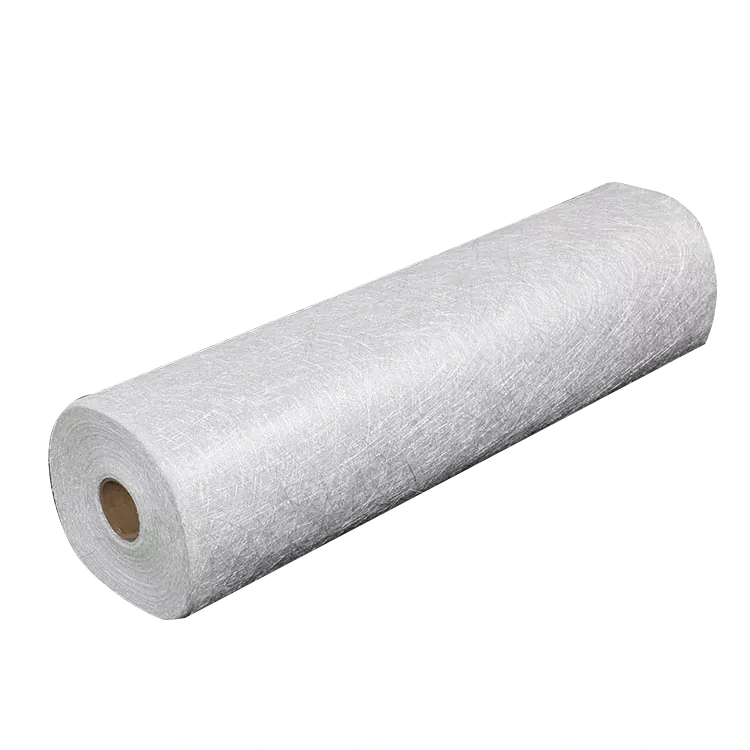
Choosing the right reinforcement material is essential for producing durable, consistent, and cost-effective fiber-reinforced plastic (FRP) products. Yuruis provides 225g Fiberglass Chopped Strand Mat, a versatile E-Glass reinforcement material designed to balance fiber loading, laminate thickness, and manufacturing efficiency. With randomly distributed chopped strands and a powder binder, this material supports various resin-based composite processes, making it a practical option for manufacturers seeking controlled laminate construction and dependable production performance.
225g Fiberglass Chopped Strand Mat is a medium-weight reinforcement material widely used in FRP manufacturing. Its 225g/m² area weight provides a balanced reinforcement level, allowing manufacturers to control laminate thickness while maintaining flexibility in production. This article explores its material structure, technical specifications, advantages, manufacturing applications, comparison with other fiberglass mat weights, and important purchasing considerations. It also explains how to select a suitable chopped strand mat supplier for different composite production requirements.
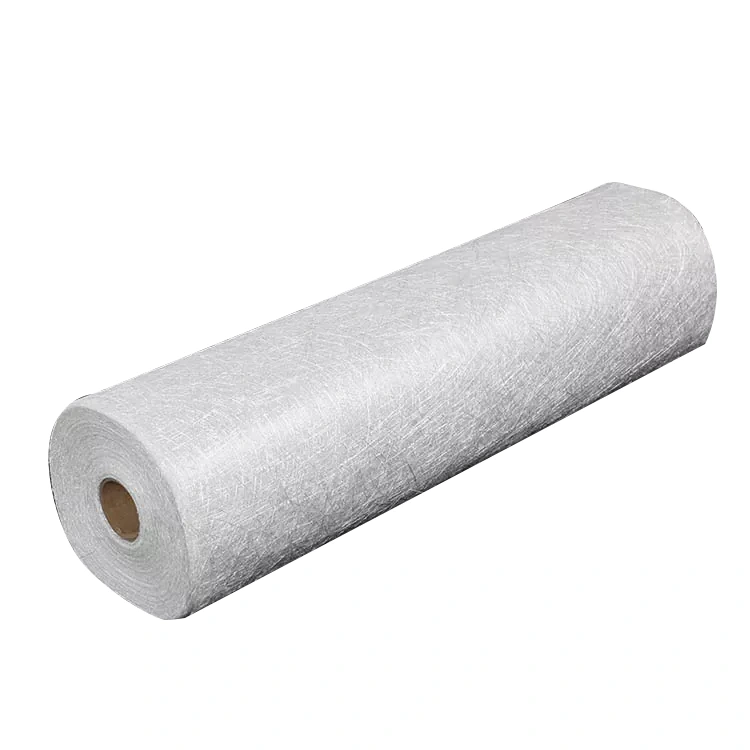
Table of Contents
1. What Is 225g Fiberglass Chopped Strand Mat?
2. Why Is 225g/m² an Important Reinforcement Weight?
3. Key Technical Specifications and Material Properties
4. Main Advantages in FRP Manufacturing
5. Common Industrial Applications
6. Comparison with Other Fiberglass Chopped Strand Mat Weights
7. Which Manufacturing Processes Can Use 225g CSM?
8. What Should Buyers Consider Before Ordering?
9. Why Choose Yuruis as Your Fiberglass Material Supplier?
10. Frequently Asked Questions
1. What Is 225g Fiberglass Chopped Strand Mat?
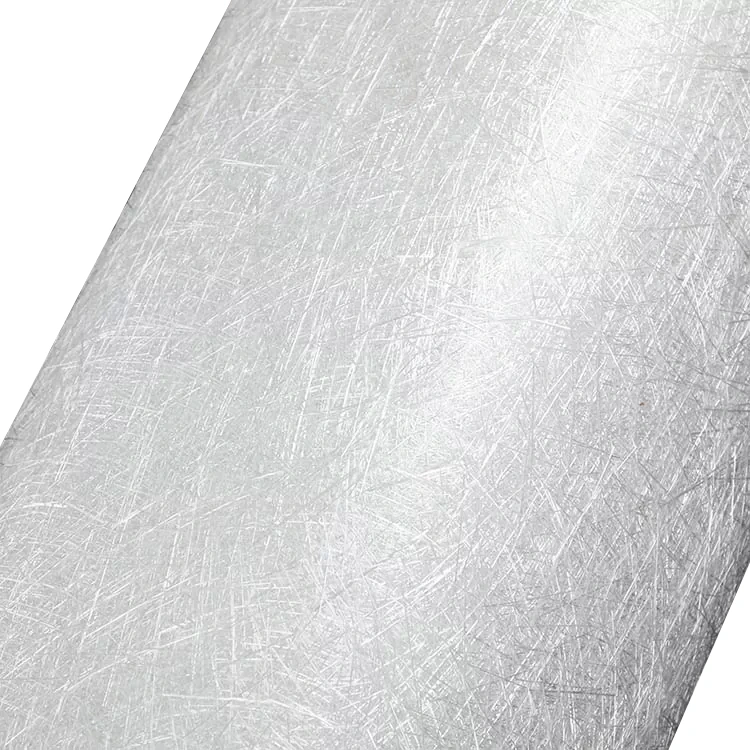
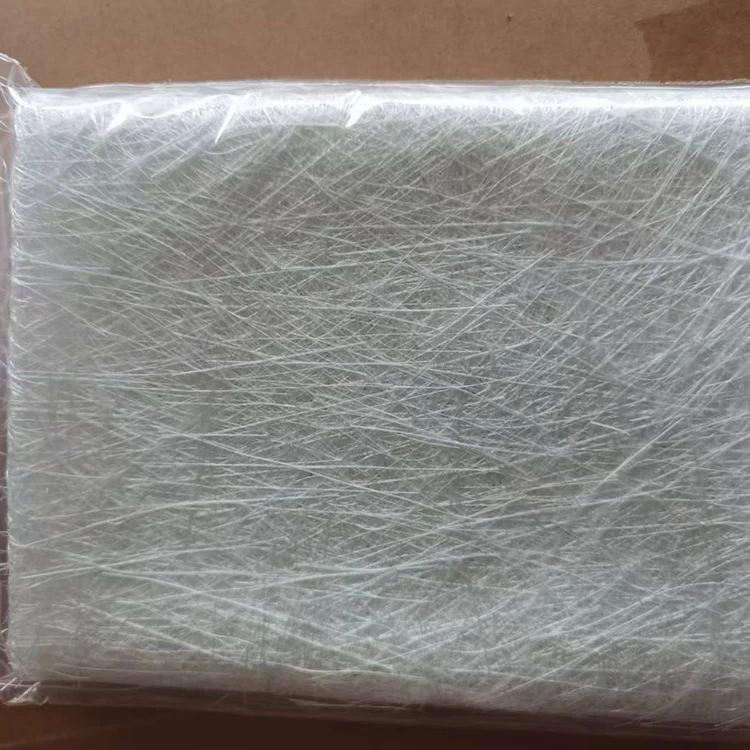
225g Fiberglass Chopped Strand Mat is a non-woven reinforcement material manufactured from randomly distributed E-Glass fibers bonded together with a powder binder. Its nominal area weight is 225 grams per square meter (225g/m²), providing a moderate reinforcement level for composite laminate production.
Unlike woven fiberglass fabrics, which contain fibers arranged in specific directional patterns, chopped strand mat features randomly oriented fibers. This structure helps distribute reinforcement across multiple directions within the composite laminate.
During production, the fiberglass strands are distributed into a uniform mat and held together by a binder. When impregnated with compatible resin, the mat becomes part of the finished composite structure.
Typical characteristics include:
- Fiber material: E-Glass fiberglass.
- Fiber arrangement: Randomly distributed chopped strands.
- Binder system: Powder binder.
- Area weight: 225g/m².
- Material composition: 100% fiberglass.
- Color: White.
- Resin compatibility: Unsaturated polyester, vinyl ester, epoxy, and phenolic resin systems.
Because of its moderate weight and versatile structure, this material is suitable for manufacturers who need a balance between reinforcement distribution and manageable laminate buildup.
2. Why Is 225g/m² an Important Reinforcement Weight?
In composite manufacturing, the weight of fiberglass chopped strand mat directly influences the amount of reinforcement introduced into each laminate layer. Selecting an appropriate weight helps manufacturers achieve the required laminate structure without unnecessarily increasing material consumption or finished product thickness.
A 225g/m² fiberglass mat occupies a useful position between lightweight and heavier reinforcement grades. It provides more reinforcement per layer than 100g/m² or 150g/m² materials while allowing finer control than 300g/m², 450g/m², or 600g/m² alternatives.
Better Control Over Laminate Construction
For manufacturers producing composite panels, pipes, tanks, and molded components, controlling the number of reinforcement layers is an important production consideration.
Using 225g CSM allows manufacturers to adjust:
- The number of reinforcement plies required.
- The overall laminate thickness.
- The distribution of fiberglass reinforcement.
- The conformability of the material around curved mold surfaces.
- The balance between material consumption and structural requirements.
Flexible Reinforcement Combinations
Another advantage is that 225g fiberglass mat can be combined with different reinforcement weights within the same laminate. For example, a manufacturer may use 225g CSM for controlled layer buildup and introduce 300g or 450g mat where additional reinforcement is required.
The final laminate schedule should always be determined according to product geometry, mechanical design requirements, resin characteristics, and applicable testing standards.
3. Key Technical Specifications and Material Properties
Technical specifications are essential when evaluating fiberglass reinforcement materials for industrial applications. Buyers should review not only the nominal area weight but also the fiber type, binder system, moisture content, roll dimensions, and resin compatibility.
The following table summarizes the main specifications of Yuruis 225g Fiberglass Chopped Strand Mat.
| Specification | Details |
|---|---|
| Product Name | 225g Fiberglass Chopped Strand Mat |
| Brand | Yuruis |
| Area Weight | 225g/m² |
| Fiber Type | E-Glass |
| Binder Type | Powder Binder |
| Material Composition | 100% Fiberglass |
| Resin Compatibility | UP / VE / EP / PF |
| Moisture Content | ≤0.2% |
| Color | White |
| Standard Width | Approximately 1.04m |
| Customized Width | Available upon request |
| Roll Length | Approximately 96m |
| Processing Service | Cutting |
| Production Capacity | 4,000 tons/year |
These specifications provide a useful reference for purchasing and production planning. Actual ordering requirements, including roll weight, dimensional tolerances, binder content, and other technical parameters, should be confirmed with the supplier before production.
Why Does Moisture Content Matter?
Moisture content is an important consideration when storing and processing fiberglass reinforcement. Excessive moisture may affect material handling and resin impregnation under certain production conditions.
Yuruis specifies a moisture content of ≤0.2% for this product. Buyers should also consider storage conditions, packaging integrity, and material handling practices to maintain consistent product quality.
4. Main Advantages in FRP Manufacturing
The practical value of 225g Fiberglass Chopped Strand Mat comes from its combination of moderate reinforcement weight, random fiber orientation, and compatibility with several commonly used resin systems.
4.1 Multidirectional Reinforcement Distribution
Randomly distributed chopped strands help provide reinforcement across multiple directions. This makes the material useful for composite products where reinforcement is not intended to be concentrated along one primary fiber direction.
4.2 Controlled Laminate Thickness
Compared with heavier chopped strand mats, the 225g grade allows manufacturers to build laminates in more controlled increments. This is particularly useful when product dimensions and laminate thickness need to be managed carefully.
4.3 Compatibility with Multiple Resin Systems
The material specification supports several resin systems, including:
- UP (Unsaturated Polyester Resin): Commonly used in general-purpose FRP products.
- VE (Vinyl Ester Resin): Selected for composite applications requiring specific chemical resistance properties.
- EP (Epoxy Resin): Used in composite systems requiring particular mechanical and bonding characteristics.
- PF (Phenolic Resin): Used in selected industrial composite applications.
Actual compatibility depends on the binder formulation, resin chemistry, curing conditions, and production requirements. Buyers should confirm suitability before mass production.
4.4 Adaptability to Different Product Geometries
The chopped strand structure can be cut and positioned according to mold dimensions. This makes it practical for producing components with curved surfaces, irregular shapes, and different geometric configurations.
4.5 Flexible Production Planning
Manufacturers can combine different CSM weights to create customized laminate schedules. This flexibility helps production teams adjust reinforcement levels according to the requirements of individual product sections.
5. Common Industrial Applications
225g Fiberglass Chopped Strand Mat is used in various industries that manufacture fiber-reinforced plastic products. Its moderate reinforcement weight makes it suitable for applications requiring controlled layer construction and multidirectional fiberglass reinforcement.
FRP Panels and Building Components
FRP panels are used in industrial buildings, equipment enclosures, and other construction-related applications. Chopped strand mat can serve as a reinforcement layer in composite panel manufacturing, helping manufacturers develop laminates with specified thickness and material distribution.
Storage Tanks and Chemical Equipment
Fiberglass reinforcement is widely incorporated into composite tanks and industrial containers. The 225g grade can be used as part of a multi-layer reinforcement structure, depending on the tank design, resin system, and service environment.
Marine and Boat Components
Marine composite manufacturing requires reinforcement materials that can conform to different mold shapes. Chopped strand mat is commonly used in boat hulls, interior structures, and other molded fiberglass components.
Automotive and Transportation Parts
Selected automotive composite components use fiberglass reinforcement to meet specific structural, dimensional, and manufacturing requirements. A 225g mat can be incorporated into suitable molded components where its reinforcement weight matches the product design.
Sanitary Products and Cooling Tower Components
Fiberglass composite materials are also used in sanitary ware, cooling tower components, and industrial equipment parts. The appropriate mat weight depends on the required laminate thickness, product geometry, and operating conditions.
Other potential application areas include:
- FRP pipes and fittings.
- Industrial composite structures.
- Building-related composite products.
- Water treatment equipment.
- Custom fiberglass molded products.
6. Comparison with Other Fiberglass Chopped Strand Mat Weights
Choosing between different fiberglass chopped strand mat weights requires an understanding of the intended laminate structure. A heavier mat introduces more reinforcement per unit area, while a lighter mat provides smaller increments for laminate construction.
The following comparison illustrates the typical positioning of different CSM grades.
| CSM Weight | Reinforcement Level | Laminate Buildup | Typical Role |
|---|---|---|---|
| 100g/m² | Low | Fine | Thin layers and surface reinforcement |
| 150g/m² | Low to Medium | Controlled | Lightweight FRP construction |
| 225g/m² | Medium | Moderate | General laminate buildup and layer control |
| 300g/m² | Medium to High | Faster | General-purpose FRP reinforcement |
| 450g/m² | High | Fast | Thicker laminate sections |
| 600g/m² | Very High | Very Fast | Heavy laminate construction |
When Should You Choose 225g Instead of 300g?
The decision depends on how much reinforcement is required per layer. If a product design calls for more controlled laminate buildup, 225g CSM may be a more suitable choice than 300g CSM.
For example, manufacturers producing composite components with varying thickness requirements may prefer a medium-weight mat to adjust the reinforcement schedule more precisely.
However, when faster laminate buildup or higher reinforcement per ply is the main objective, 300g or heavier materials may be worth evaluating.
There is no universally optimal CSM weight. The right selection depends on engineering specifications, production methods, and finished product performance requirements.
7. Which Manufacturing Processes Can Use 225g CSM?
225g Fiberglass Chopped Strand Mat can be incorporated into several common FRP manufacturing processes. The specific production method depends on product geometry, manufacturing volume, resin selection, and tooling requirements.
Hand Lay-Up Process
Hand lay-up is a widely used composite manufacturing method. Workers cut the fiberglass mat into suitable dimensions, position it inside a mold, and apply resin to impregnate the reinforcement.
The process is particularly useful for:
- Custom fiberglass components.
- Large molded structures.
- Products with curved or irregular surfaces.
- Small- and medium-volume FRP production.
Molding Process
Multiple layers of 225g CSM can be arranged inside a mold to achieve the specified laminate construction. Manufacturers can adjust the number of layers and combine different reinforcement grades according to the product design.
Mechanical Forming
In selected composite production systems, chopped strand mat can be incorporated into more repeatable reinforcement placement and forming operations. Equipment configuration and material handling characteristics should be evaluated before production.
Regardless of the forming process, manufacturers should verify resin wet-out, laminate consolidation, curing conditions, and finished-product quality through appropriate production trials.
8. What Should Buyers Consider Before Ordering?
For industrial purchasing teams, selecting a suitable 225g Fiberglass Chopped Strand Mat supplier involves more than checking the nominal area weight. Several technical and commercial factors can influence material suitability and production efficiency.
1. Verify the Area Weight
Confirm that the material meets the required 225g/m² specification. Ask about applicable testing methods and production tolerances to ensure that the supplied product meets your quality requirements.
2. Confirm the Binder Type
Powder-bound and emulsion-bound chopped strand mats have different characteristics. Select the appropriate binder according to resin compatibility, forming requirements, and the intended application.
3. Check Resin Compatibility
Confirm whether the mat is suitable for your specific polyester, vinyl ester, epoxy, or phenolic resin system. Resin compatibility should be evaluated under actual processing conditions.
4. Evaluate Roll Dimensions
Roll width and length affect material utilization, storage, transportation, and production planning. Yuruis offers a standard width of approximately 1.04m and a roll length of approximately 96m, with customized widths available upon request.
5. Review Moisture Content and Packaging
Moisture content and packaging conditions should be considered during purchasing and storage. Request relevant technical documentation and confirm that packaging is suitable for transportation and warehouse conditions.
6. Consider Supplier Production Capacity
For long-term procurement, manufacturers should evaluate whether a supplier can support stable material availability and consistent product specifications.
Before placing an order, it is advisable to prepare a purchasing checklist covering:
- Required CSM weight and dimensional tolerances.
- Binder type and resin compatibility.
- Roll width, length, and total quantity.
- Packaging and transportation requirements.
- Application details and production process.
- Quality inspection and documentation requirements.
9. Why Choose Yuruis as Your Fiberglass Material Supplier?
Choosing an experienced fiberglass material supplier helps manufacturers simplify procurement and maintain consistency across composite production projects.
Yuruis, operating under Taizhou Yuruis New Materials Co., Ltd., supplies fiberglass materials and carbon fiber composite products for industrial applications. Its product portfolio includes fiberglass chopped strand mat, fiberglass surface mat, fiberglass yarn, fiberglass woven roving, carbon fiber fabric, and other composite reinforcement materials.
Established Production Capability
Yuruis has a stated annual production capacity of 4,000 tons, providing a production foundation for customers purchasing fiberglass reinforcement materials for different industrial applications.
Multiple Fiberglass Mat Options
In addition to 225g CSM, customers can explore different fiberglass chopped strand mat weights, including:
- 100g Fiberglass Chopped Strand Mat
- 150g Fiberglass Chopped Strand Mat
- 300g Fiberglass Chopped Strand Mat
- 450g Fiberglass Chopped Strand Mat
This product range allows purchasing teams to compare reinforcement weights and select materials according to different laminate requirements.
Customized Width and Cutting Services
Different FRP production lines may require different material dimensions. Yuruis offers customized width options and cutting services, allowing customers to discuss material configurations based on their manufacturing processes.
Support for Industrial Procurement
Whether you manufacture FRP panels, storage tanks, pipes, marine components, or other composite products, providing clear technical requirements helps the supplier evaluate the appropriate material specification.
To learn more about the company and its manufacturing capabilities, visit the Yuruis company profile or explore its fiberglass materials product range.
10. Frequently Asked Questions
Q1: What is 225g Fiberglass Chopped Strand Mat used for?
225g Fiberglass Chopped Strand Mat is used as a reinforcement material in FRP composite manufacturing. Typical applications include fiberglass panels, storage tanks, pipes, boats, automotive components, sanitary products, cooling tower components, and industrial composite structures.
Q2: What does 225g/m² mean in fiberglass chopped strand mat?
225g/m² refers to the nominal area weight of the fiberglass mat. It means that one square meter of the material has a nominal weight of 225 grams. This measurement helps manufacturers compare reinforcement quantities across different CSM grades.
Q3: Is 225g fiberglass chopped strand mat suitable for hand lay-up?
Yes. It is suitable for hand lay-up applications. The mat can be cut and positioned manually according to mold dimensions before being impregnated with a compatible resin system.
Q4: Which resin systems are compatible with 225g CSM?
According to the Yuruis product specification, the material supports unsaturated polyester (UP), vinyl ester (VE), epoxy (EP), and phenolic (PF) resin systems. Actual compatibility should be confirmed based on the binder formulation and production conditions.
Q5: What is the difference between 225g and 450g fiberglass chopped strand mat?
The main difference is the reinforcement weight per square meter. A 225g mat provides moderate reinforcement and finer laminate buildup, while a 450g mat introduces more reinforcement per layer and supports faster buildup of thicker laminate sections.
Q6: Can 225g CSM be combined with other fiberglass mat weights?
Yes. It can be combined with 300g, 450g, or other suitable reinforcement materials within the same laminate. The combination should be determined according to structural requirements, product geometry, and the intended manufacturing process.
Q7: What is the standard width of Yuruis 225g fiberglass chopped strand mat?
The standard width is approximately 1.04m, and the standard roll length is approximately 96m. Customized widths can also be discussed according to specific production requirements.
Q8: What is the moisture content of Yuruis 225g CSM?
The specified moisture content is ≤0.2%. Buyers should confirm the applicable inspection requirements and maintain suitable storage conditions to protect the material before use.
Q9: Can Yuruis provide customized fiberglass chopped strand mat?
Yuruis offers customized width options and cutting services. Customers can provide their required dimensions, application details, and purchasing quantities to discuss suitable supply arrangements.
Q10: How can I choose the right fiberglass chopped strand mat weight?
Consider the required laminate thickness, reinforcement level, product geometry, resin system, and manufacturing process. Lightweight grades offer finer layer control, while heavier grades provide more reinforcement per layer. For specific engineering requirements, consult your composite design team and material supplier.
11. Conclusion
Selecting the right reinforcement material is an important step in achieving consistent FRP composite manufacturing results. With its 225g/m² area weight, randomly distributed E-Glass fibers, powder binder, and compatibility with several resin systems, 225g Fiberglass Chopped Strand Mat offers a practical balance between reinforcement loading and laminate construction flexibility. It can be used in hand lay-up, molding, and selected mechanical forming processes for a wide range of industrial composite products. For manufacturers seeking a dependable fiberglass material supply partner, Yuruis offers multiple CSM weight options, customized widths, and cutting services to support different production requirements. Whether you are developing a new composite product or optimizing an existing FRP production line, contact us today to discuss your technical specifications, request product details, and explore a suitable fiberglass chopped strand mat solution for your business.
Related News
- What Makes Alkali-Free Glass Fiber Spray Roving the Smart Choice for Spray-Up FRP Molding
- What Makes Powder-Bound Fiberglass Chopped Strand Mat the Smart Choice for FRP Manufacturers
- Custom Transparent FRP Grating: Combining Light Transmission, Strength and Corrosion Resistance
- How Can High-Strength Fiberglass Chopped Strand Mat Improve FRP Reinforcement and Manufacturing Performance
- How Can Custom Fiberglass Chopped Strand Mat Improve the Quality and Efficiency of FRP Manufacturing
- Weaving of Unidirectional Carbon Fiber Fabric
Leave me a message
New Products
News Recommendations