English
- English
- Español
- Português
- русский
- Français
- 日本語
- Deutsch
- tiếng Việt
- Italiano
- Nederlands
- ภาษาไทย
- Polski
- 한국어
- Svenska
- magyar
- Malay
- বাংলা ভাষার
- Dansk
- Suomi
- हिन्दी
- Pilipino
- Türkçe
- Gaeilge
- العربية
- Indonesia
- Norsk
- تمل
- český
- ελληνικά
- український
- Javanese
- فارسی
- தமிழ்
- తెలుగు
- नेपाली
- Burmese
- български
- ລາວ
- Latine
- Қазақша
- Euskal
- Azərbaycan
- Slovenský jazyk
- Македонски
- Lietuvos
- Eesti Keel
- Română
- Slovenski
- मराठी
- Srpski језик

What Makes Alkali-Free Glass Fiber Spray Roving the Smart Choice for Spray-Up FRP Molding
For FRP manufacturers, consistent reinforcement performance from the spray gun to the cured laminate is essential. Yuruis Alkali-Free Glass Fiber Spray Roving is an E-Glass reinforcement with a vinyl-coated surface treatment and a multi-strand bulk yarn structure, designed specifically for spray-up molding with UP and VE resins. Whether you produce tanks, marine components, or sanitary ware, understanding what this roving is, why it performs, and how to use it can improve your composite operations.
This blog explains what Alkali-Free Glass Fiber Spray Roving is, why it matters for spray-up FRP molding, how to process it, which applications benefit, and when to choose it over alternatives. It covers material specifications, performance features, a comparison table, sourcing guidance from Yuruis, and a detailed FAQ section for quick reference.
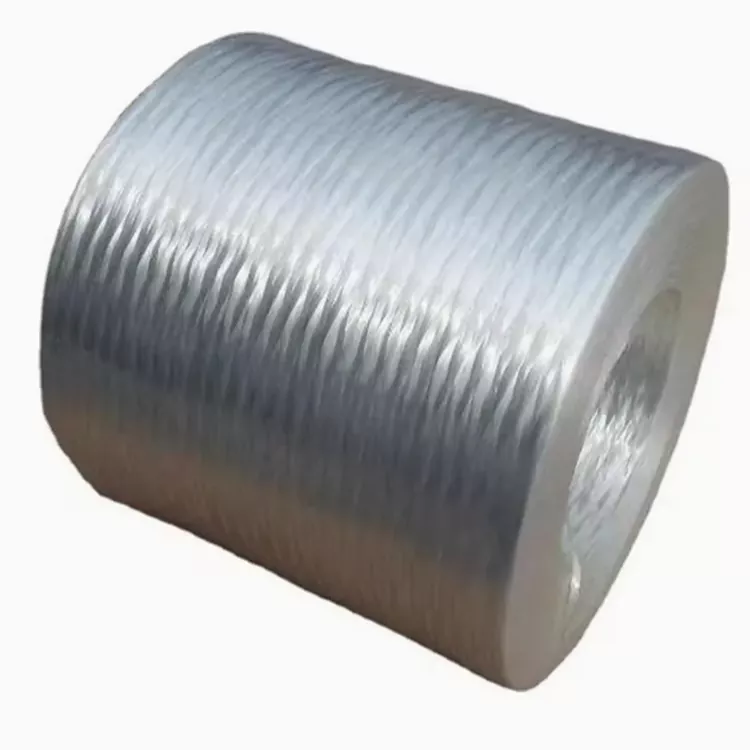
Table of Contents
- What Is Alkali-Free Glass Fiber Spray Roving?
- Why Choose This Roving for Spray-Up Molding?
- How Does Spray-Up Processing Work?
- Which Applications Use This Roving?
- Comparison: Spray Roving vs. Fiberglass Mat
- When Should You Select This Roving?
- Yuruis Manufacturing and Supply Capabilities
- FAQ
- Contact Yuruis for Your Requirements
What Is Alkali-Free Glass Fiber Spray Roving?
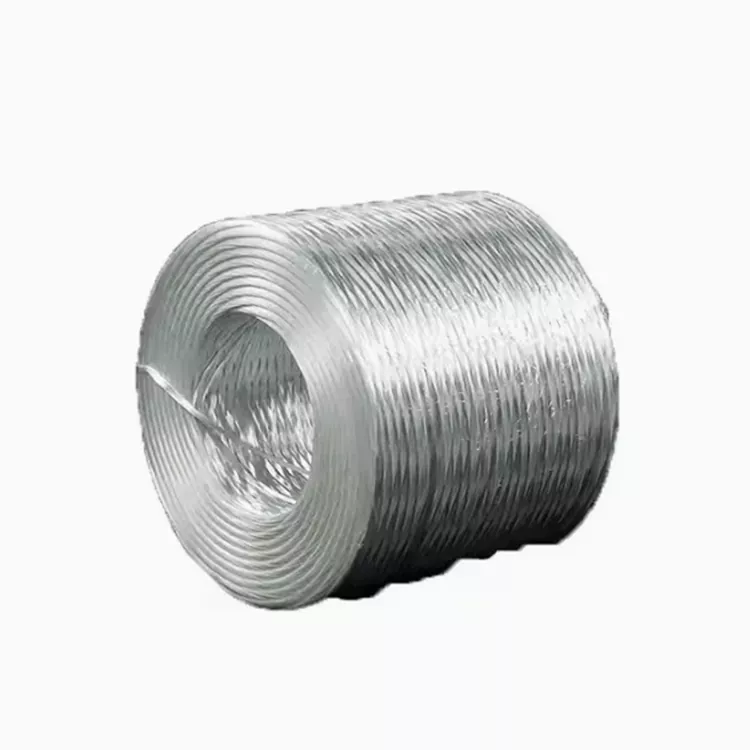
Alkali-Free Glass Fiber Spray Roving is an E-Glass reinforcement material supplied as a bulk yarn made from multiple glass fiber strands. Unlike pre-formed mats or woven fabrics, this roving is fed continuously into a cutter and chopped into short fibers during the spray-up process. Yuruis manufactures this roving with a vinyl-coated surface treatment and a white appearance, specifically engineered for spray-up molding with unsaturated polyester (UP) and vinyl ester (VE) resins.
Key material characteristics include:
- E-Glass fiber construction
- Bulk yarn structure (multi-strand)
- Vinyl-coated surface treatment
- Designed for continuous feeding and cutting
- Reinforcement material for FRP composites
Why Choose This Roving for Spray-Up Molding?
Spray-up molding demands stable feeding, consistent cutting, and reliable fiber distribution. Yuruis Alkali-Free Glass Fiber Spray Roving is specified with good short-cut performance, uniform thickness, and high strength. These features help ensure that fibers are evenly distributed and properly wetted out by the resin, leading to consistent laminate quality.
Additional reasons to choose this roving:
- Compatibility: Formulated for UP and VE resin systems, which are common in FRP production.
- Processing efficiency: The bulk yarn structure feeds smoothly through spray-up equipment, reducing downtime.
- Surface treatment: Vinyl coating promotes fiber-resin bonding, improving mechanical properties.
- Versatility: Suitable for a wide range of molded FRP products.
How Does Spray-Up Processing Work?
In spray-up molding, continuous roving is passed through a chopper gun that cuts it into short fibers (typically 25–50 mm) and deposits them onto a mold simultaneously with resin. The key processing parameters include:
- Cutting length and feed rate
- Resin-to-glass ratio
- Spray equipment settings
- Operator technique
Yuruis roving is designed for good short-cut performance, meaning the fibers cut cleanly without excessive fuzzing or breakage. This leads to better fiber distribution and wet-out, which are critical for structural integrity.
Which Applications Use This Roving?
Alkali-Free Glass Fiber Spray Roving is used in numerous FRP applications where chopped fiber reinforcement is required:
- FRP building products: panels, profiles, and custom shapes
- Tanks and chemical equipment: storage vessels, pipes, and scrubbers
- Marine components: boat hulls, decks, and accessories
- Sanitary ware: bathtubs, shower trays, and sinks
- Automotive components: body panels, fenders, and interior parts
- Electrical and industrial parts: housings, enclosures, and machine guards
Comparison: Spray Roving vs. Fiberglass Mat
| Feature | Alkali-Free Glass Fiber Spray Roving | Fiberglass Mat |
|---|---|---|
| Supply form | Continuous roving (bulk yarn) | Pre-formed nonwoven mat |
| Processing method | Chopped during spray-up | Laid by hand or machine |
| Fiber length control | Adjustable at cutter | Fixed by mat manufacturer |
| Typical resin systems | UP, VE | UP, VE, epoxy |
| Best for | Complex shapes, high-volume production | Simple shapes, hand lay-up |
When Should You Select This Roving?
Choose Yuruis Alkali-Free Glass Fiber Spray Roving when:
- You are using spray-up molding with UP or VE resin.
- You need adjustable fiber length and consistent distribution.
- Your production requires high throughput and reliable feeding.
- You want a cost-effective reinforcement for molded FRP parts.
- Your application demands good mechanical strength and corrosion resistance.
For projects requiring pre-formed reinforcement, fiberglass mat may be more suitable. However, for spray-up processes, roving offers flexibility and efficiency advantages.
Yuruis Manufacturing and Supply Capabilities
Yuruis has focused on fiber composite materials since 2017, with a product range covering E-Glass roving, fiberglass mats, FRP grilles, and carbon fiber products. The company operates production lines with molding, cutting, coating, and testing equipment, ensuring consistent quality and customization. Yuruis supplies customers in more than 20 countries across Asia, Europe, Africa, and the Americas, offering product consultation, sample testing, and logistics support.
Product specifications at a glance:
| Item | Specification |
|---|---|
| Product | Alkali-Free Glass Fiber Spray Roving |
| Fiberglass Type | E-Glass |
| Yarn Structure | Bulk Yarn |
| Surface Treatment | Vinyl Coated |
| Color | White |
| Main Process | Spray-up Molding |
| Main Resin | UP / VE |
| Specification | One Meter Wide |
| Production Capacity | 320,000 Tons/Year |
FAQ
What is Alkali-Free Glass Fiber Spray Roving used for?
It is mainly used as glass fiber reinforcement for spray-up FRP molding. Typical applications include molded tanks, marine components, sanitary ware, automotive parts, and other fiberglass-reinforced products.
Is the roving made from E-Glass?
Yes, the supplied product specification identifies E-Glass as the fiberglass type.
Which resin systems are compatible?
The current specification lists unsaturated polyester (UP) and vinyl ester (VE) resin systems as the main applications.
How does spray roving differ from fiberglass mat?
Roving is supplied as continuous yarn and is chopped during the spray-up process, while fiberglass mat is supplied as a pre-formed nonwoven reinforcement. They therefore enter the molding process in different forms and are selected according to the production method.
What is the surface treatment?
The supplied specification identifies a vinyl-coated surface treatment.
What is the main processing feature?
The supplied product information highlights good short-cut performance, together with uniform thickness and high strength, for applications requiring consistent fiber feeding and placement.
Can it be used for FRP tanks and chemical equipment?
It can be used in selected FRP tank and chemical-equipment applications. Final suitability depends on the resin system, service medium, temperature, laminate design, and other project requirements.
Can samples be requested before bulk production?
Yes. Sample testing can be arranged so the material can be evaluated against the customer's existing production process and technical requirements.
What information is needed for a quotation?
Useful information includes the intended application, resin system, spray-up process, required specification, estimated order quantity, packaging requirements, and delivery destination.
Contact Yuruis for Your Requirements
Ready to optimize your spray-up molding with Alkali-Free Glass Fiber Spray Roving? Contact us today at Yuruis to discuss your project. Send your requirements—including product specifications, dimensions, quantity, application, and delivery details—so our team can review and respond promptly. Let Yuruis be your reliable partner for high-quality fiberglass reinforcement solutions.
Related News
- What Makes Powder-Bound Fiberglass Chopped Strand Mat the Smart Choice for FRP Manufacturers
- Custom Transparent FRP Grating: Combining Light Transmission, Strength and Corrosion Resistance
- How Can High-Strength Fiberglass Chopped Strand Mat Improve FRP Reinforcement and Manufacturing Performance
- How Can Custom Fiberglass Chopped Strand Mat Improve the Quality and Efficiency of FRP Manufacturing
- Weaving of Unidirectional Carbon Fiber Fabric
- Why Is 225g Fiberglass Chopped Strand Mat a Smart Choice for Reliable FRP Composite Manufacturing
Leave me a message
New Products
News Recommendations